GIVING STRESSED FAMILIES ONE LESS THING TO WORRY ABOUT
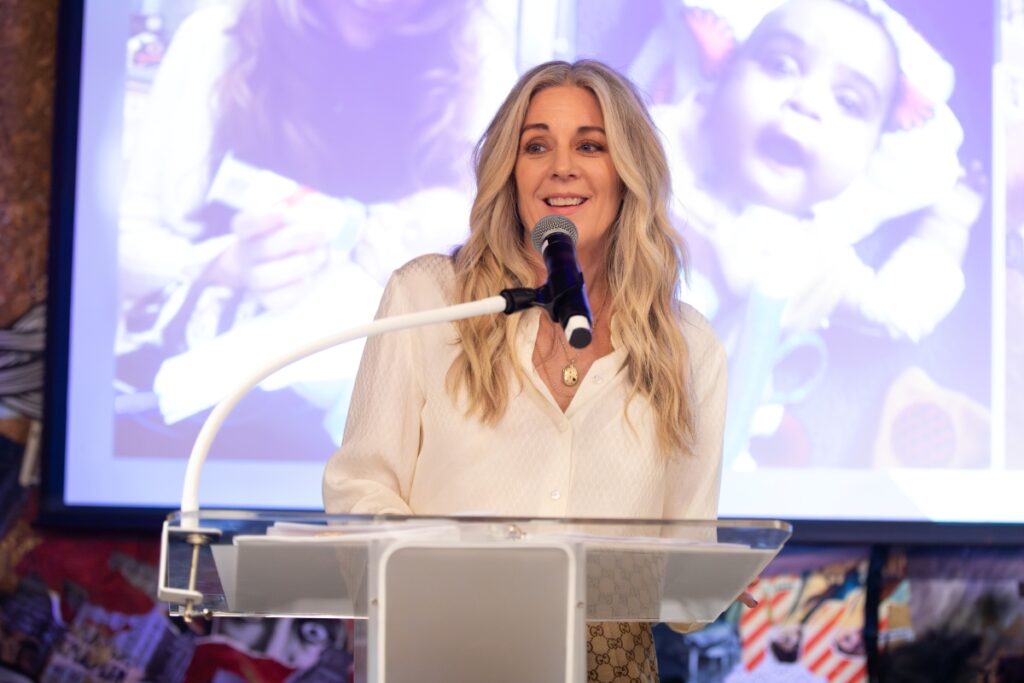
CARRIE MEGHIE, CO-FOUNDER OF THE JACKSON CHANCE FOUNDATION, SPEAKS AT THE PODIUM AT THE ORGANIZATION’S ANNUAL PING PONG BALL. /COURTESY CARRIE MEGHIE
MeetDaily Point of Light Awardhonoree Carrie Meghie. Read her story, and nominatean outstanding volunteer or family as a Daily Point of Light.
Carrie Meghie always says that her son Jackson was as special as his birthday is unique. Born on November 11, 2011, at 11:11 p.m., Jackson spent his whole life, except for 48 hours, in the neonatal intensive care unit at two different hospitals in Chicago before he passed away just shy of 10 months old.
In the first six weeks her son was in the hospital, Carrie and her husband spent almost $2,000 on parking. Seeing how much of a financial burden that cost can be, they created the Jackson Chance Foundation to help other families have the opportunity to be with their children who are in the NICU as much as possible. The foundation provides families with a 24/7 unlimited in-and-out parking pass so they don’t have to pay for the expensive hospital parking during that challenging period. They can leave to go walk their dog, go to a meeting, and come back at lunch, instead of paying every time they leave the garage.
Carrie’s dedication to the Jackson Chance Foundation has allowed the organization to thrive, and they’re entering a period of tremendous growth. They just hired a new Executive Director, which will allow Carrie to dedicate more volunteer time to expanding the organization’s reach.
While Carrie’s story may be one of intense sadness, it’s also one that provides her with tremendous satisfaction. She sees the opportunity to provide family members with parking as a special way to honor her son and let his memory live on. While losing a child is heartbreaking, Carrie’s volunteer work allows her to celebrate and talk about him, while also impacting other babies like him. Her powerful personal story and determination to turn a painful situation into an opportunity to help others show just how influential volunteer work can be.
What inspired you to get started with this initiative?
My husband and I started the Jackson Chance Foundation in honor of our son, Jackson. We provide parking and transportation for families in the NICU. Parking was our largest out-of-pocket expense when we were in the hospital, and we were truly shocked that it actually was a real obstacle that prevented families from being with their babies when they were in the hospital fighting for their lives. We were very fortunate and blessed to be able to be with him each and every day and had support to help pay for that and be there, and we really believe that contributed to how much happiness and joy he had while we were in the hospital. We wanted to give other families and other babies like Jackson that gift to be able to have a loved one with them 24/7.
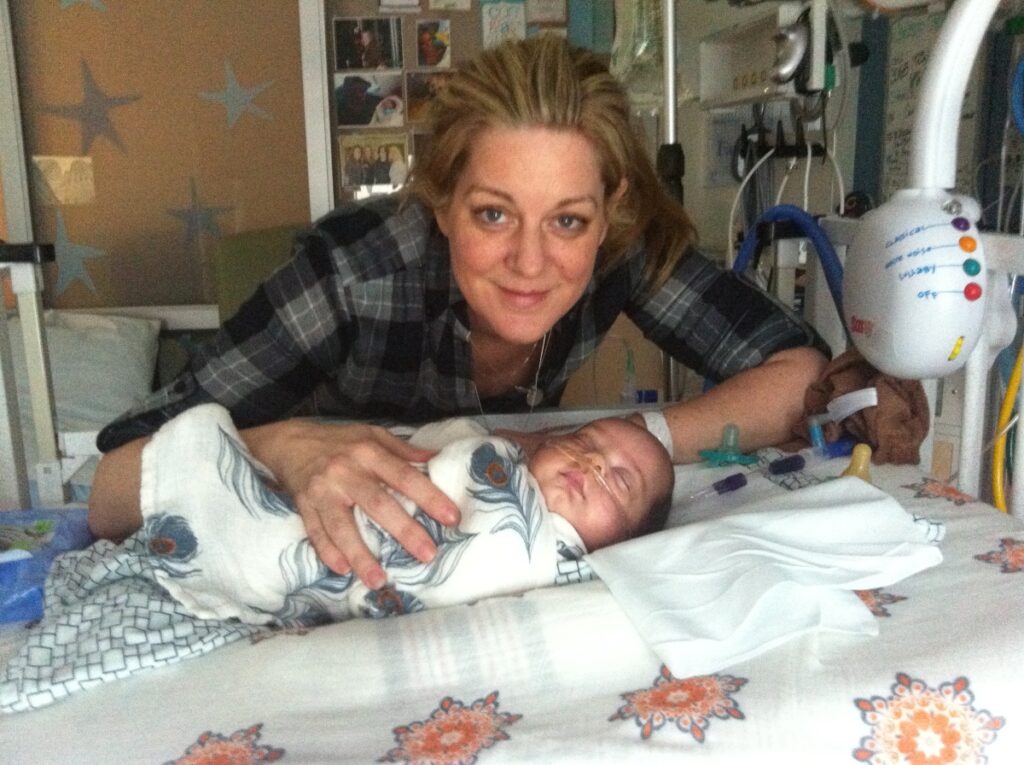
CARRIE MEGHIE, CO-FOUNDER OF THE JACKSON CHANCE FOUNDATION, SMILES WITH HER SON JACKSON IN THE HOSPITAL. /COURTESY CARRIE MEGHIE
Tell us about your volunteer role with the Jackson Chance Foundation.
It varies. We have been a very lean organization since inception until about a year ago. We had one employee, and I was very hands-on, leading the organization day-to-day and working with our board. I’m thrilled that we have a new Executive Director starting in October, which will take the day-to-day and the organization to the next level. We’re at a great growth point. I think my role will change at that point to be more board leadership, fundraising, and mission-focused.
What are your long-term plans or goals for the organization?
We recently launched at our fourth hospital in Chicago just last month, which was a great milestone, and we now cover the primary hospitals in Chicago that serve the NICU population. The next step is looking outside Chicago. We’ve done a little bit of work in LA with Cedars-Sinai. We have other top hospitals across the country that have reached out looking for us to support their NICUs. Growth outside of Chicago is the next phase.
What’s been the most rewarding part of your work?
Hearing from families. Every year at our annual event, we have a mission family who is a family very similar to us, and they often say that we knew what they needed before we knew it. We get to hear them talk about how the foundation allowed them to spend way more time and participate while their baby had a medical crisis, and how that really had an impact on the baby and the outcomes. Hearing firsthand from these families is just extremely rewarding.
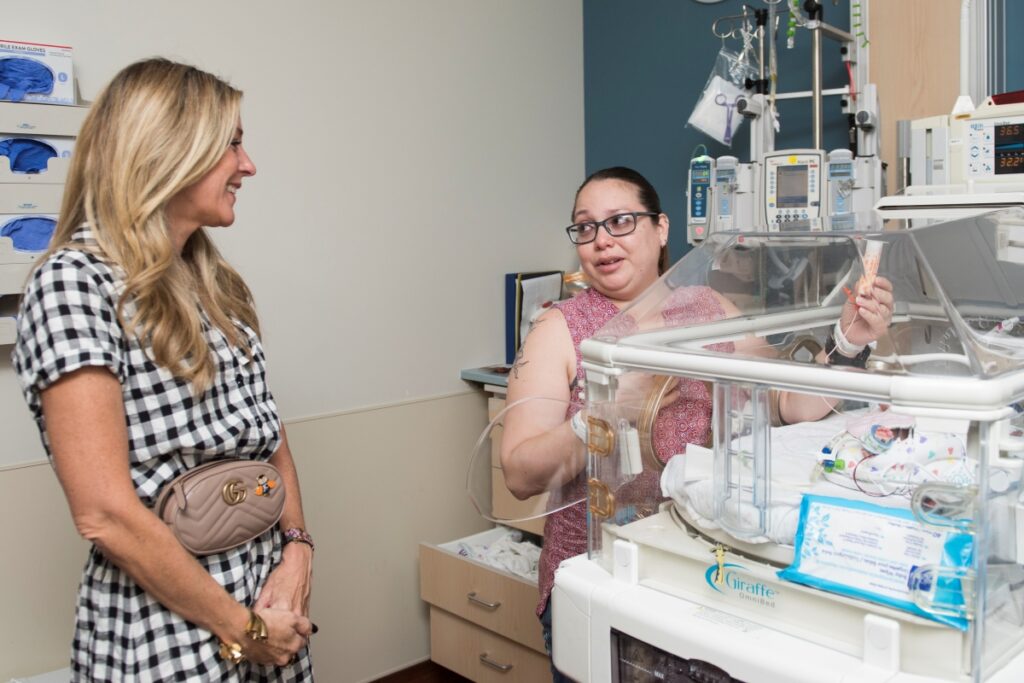
CARRIE MEGHIE (LEFT) CHATS WITH SOMEONE IN THE HOSPITAL. /COURTESY CARRIE MEGHIE
What have you learned through your experiences as a volunteer?
I am used to running businesses, and I’ve learned a lot about the differences in running a nonprofit, as well as the similarities. I have learned that there are so many genuine, generous, amazing people in the community. We initially just wanted to raise a little bit of money to support families, and the organization really took a life of its own when people started donating. We were raising hundreds of thousands of dollars. Starting a big organization wasn’t the goal. The supporters and the donors dictated the direction it was going. It was amazing to learn and see the generosity of the community.
Why is it important for others to get involved with causes they care about?
We live in a world that’s a community, and what we do impacts each other. Even the smallest thing can have a significant impact on another family. A $10 donation to us can give a family a whole 24 hours with their baby, which can be very meaningful if they’re there at an important and critical time. Even the smallest things can have great impacts on people when they when they need it. It can have way more impact than you might realize.
Any advice for people who want to start volunteering?
Reach out to an organization whose cause you believe in and just do it. Just go for it, and you can always pivot or change if it’s not quite right. If you’re unsure, the best step is to just do it. Don’t hesitate. There’s no right or wrong way, and nothing’s permanent. Just reach out and try something.
What do you want people to learn from your story?
Even though it sounds like a really heartbreaking story because we lost our son, those were an amazing 10 months. We had so much joy, and I’m honored to have been his mom for even a short period. Don’t be afraid to talk about that loss. It shouldn’t be such a taboo thing for people to talk about.
Student Baker Serves Up Sweet Support for Her Community
Elisa Lei, founder and president of Charity Treats, turns her love of baking into homemade desserts for hospitals, shelters, and first responders across Chicagoland.
Meet Daily Point of Light Award honoree Elisa Lei. Read her story, andnominate an outstanding volunteer or family as a Daily Point of Light.
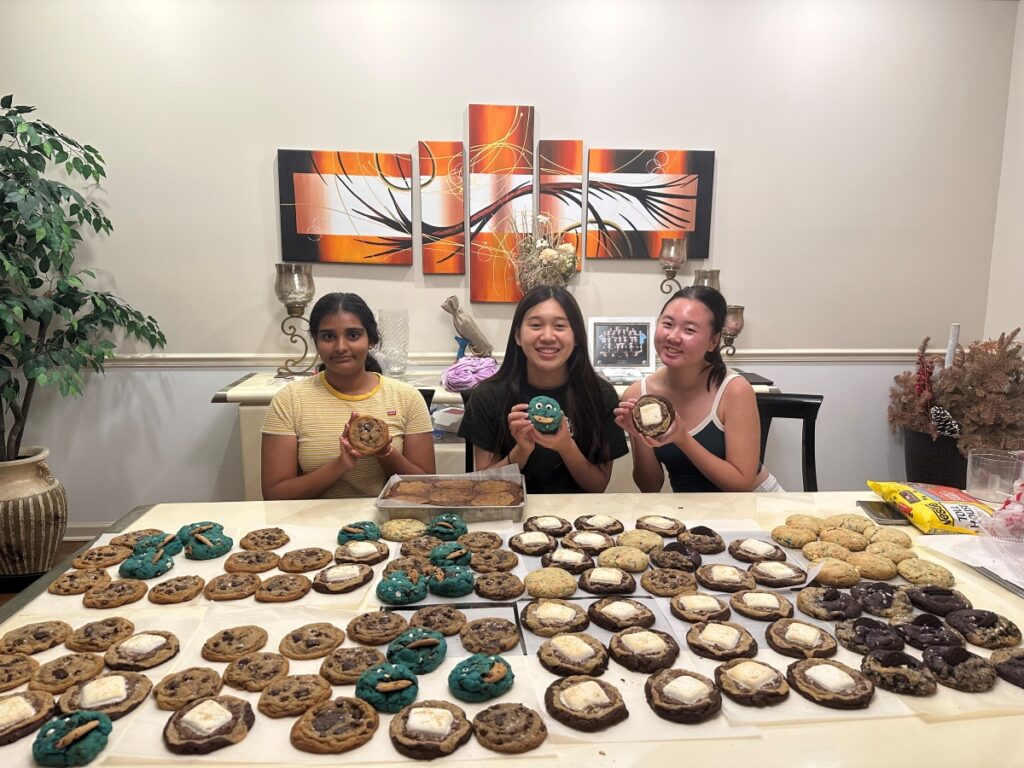
Elisa Lei has always loved watching someone light up after a bite of something she baked. Almost two years ago, the Chicago-area student decided that feeling shouldn’t stop with friends and family, so she co-founded Charity Treats, a student-run nonprofit that gives back through homemade desserts. Today, with two branches serving Chicagoland, the organization has delivered thousands of cookies to more than 25 organizations, including hospitals, homeless shelters, foster-care organizations, fire departments, and food pantries.
As president, Elisa spends about 20 hours a month planning events, coordinating volunteers, overseeing executive boards, and building community partnerships. She leads baking days for a different organization each time, runs fundraisers at farmers markets, and bake sales, and arranges every delivery. Across two summers, Charity Treats has raised more than $4,000, all reinvested in supplies.
Along the way, Elisa has learned that a strong team can accomplish far more than one person alone, and that her volunteers get better at baking every time. Some customers stop by just for a cookie and leave wanting to support the cause. For Elisa, the proof that a small idea can grow into real community impact comes out of the oven every time her volunteers gather to bake.
Working at nonprofits and volunteering as a board member for Washington County Foster Closet and the Homeless Services Coalition of Dane County, as well as serving as a crisis hotline counselor, give Jasmyne joy and purpose.
MeetDaily Point of Light AwardhonoreeJasmyne Bass. Readherstory, and nominatean outstanding volunteer or family as a Daily Point of Light.
Content Warning: Points of Light is proud to share the following uplifting and inspiring story. However, we acknowledge that portions may be difficult for some readers. We encourage you to please care for your own well-being above all.
Jasmyne Bass, 36, has made a career out of helping others. Currently, she is an anti-violence advocate for the LGBTQ+ community. She’s the Multicultural Community Outreach Specialist at a sexual violence resource center, and she trains police on trauma-informed care. She’s also the Branding and Communications Coordinator for her statewide coalition to end domestic violence.
Helping others is inextricably entwined in Jasmyne’s “off” hours, too. As a mother of three, her kids are a priority, but she’s also been a foster mom, expanding her family to include someone who needed one. And she serves on the boards of the Washington County Foster Closet (WCFC) and the Homeless Serves Consortium of Dane County (HSC).
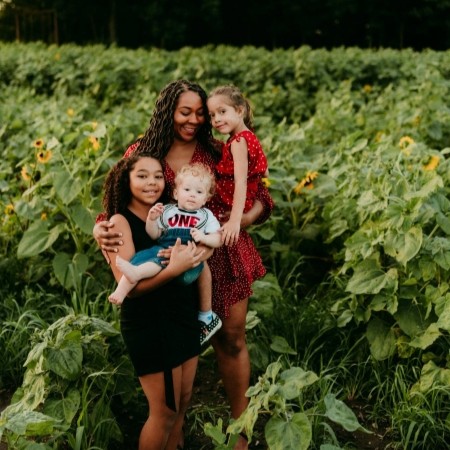
Jasmyne poses for a family photo with her children.
As a suicide prevention counselor for the Crisis Text Hotline, Jasmyne supports those in their darkest moments. Driven by lived experience, she uses her expertise to educate others through mentoring and presentations nationwide, highlighting issues affecting survivors of violence, historical trauma, and systemic harm as well as historically underserved communities.
Jasmyne’s dedication to change isn’t new. She has previously served on two other boards, one that ran a rehabilitation program for violent offenders and another that created space for LGBTQ+ people to build community in a conservative rural county. Nor is her commitment temporary. Her direct, one-on-one support changes lives, and her advocacy for systemic change will improve outcomes for years to come.
What inspires you to volunteer?
I was a foster youth, myself. I went to college for social work, intending to work with other foster youth, but after 200 hours of unpaid work at a domestic violence agency for my required practicum, I found my calling. I never left that work. But I did find my way back into the foster care system by becoming a foster parent and sitting on the WCFC board.
Tell us about your volunteer roles.
With WCFC, we discuss finances, trends, needs, and more at board meetings, and we talk to our volunteers. I support efforts that strengthen resources, visibility, and community support for foster families. Our board members do tabling as well. And if there’s an award that needs to be accepted or a bid for a grant, one of us will go.
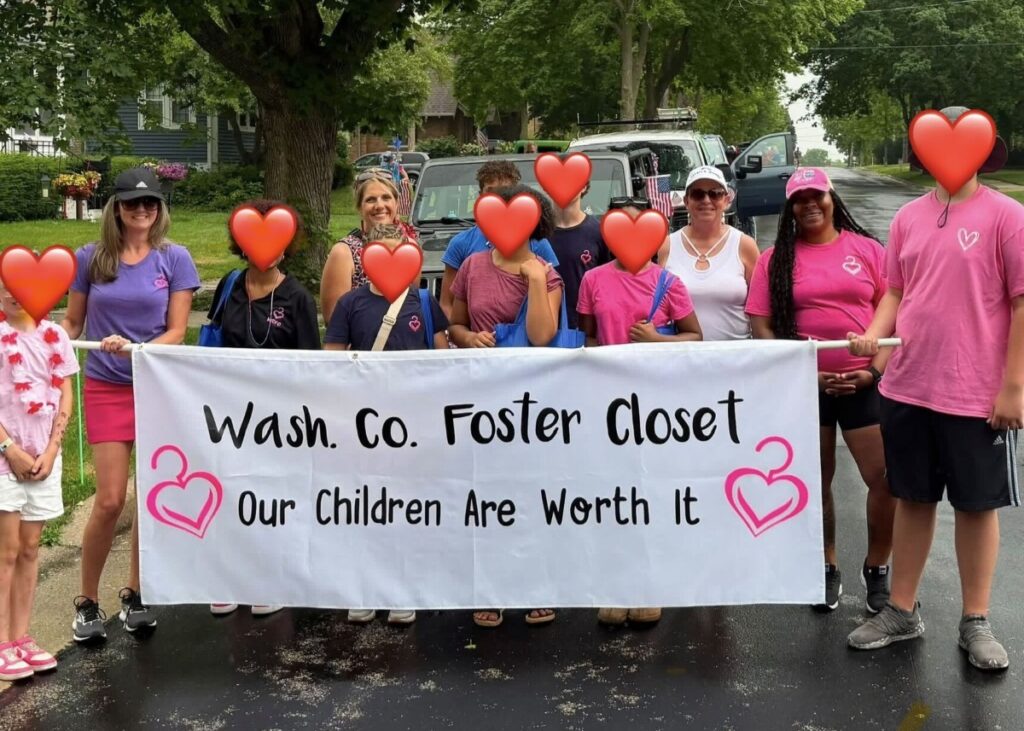
We work closely with those in the Human Services building, with family courts and such, to connect with the people whom these decisions are affecting. Officially, we meet once a month, but we do a lot in between, like representing the organization in a local parade.
I also sit on the board for the HSC. We fundraise for local shelters and run a count of the unhoused every quarter to help us figure out the best way to allocate resources. We go over paperwork, listen to presentations, and vote on who gets funding.
As part of the Voices of Dane County Committee, I contribute to conversations and initiatives centered on representation, equity, inclusion. I ensure those with intersectional or marginalized identities have a voice and are being considered in decision-making.
Volunteering for the Suicide Prevention Hotline required specialized training. I answer my phone whether I recognize a number or not, because it could be coming through that line. Some days or weeks I’ll not get a single call or text, and sometimes I’ll get them back-to-back. When someone is contemplating suicide, I’ll send emergency personnel to them if there are high lethality indicators, or I’ll stay on with them until they either get connected with a trusted loved one or until they fall asleep.
Jasmyne Bass (2nd from right), her fellow Washington County Foster Closet board members and their children walk in the local Fourth of July parade.
What inspired you to get started with these initiatives?
Foster youth often fall between the cracks. I lived with the same family from age five to 18, but they made it clear it was not a long-term family situation. So, when I was 18, I had nowhere to go. I was unhoused until I was about 20 years old, when I got pregnant with my daughter.
My life is very good now, so I try to contribute to others through organizations that offer help but may not have that lived experience. I use that experience with the Suicide Prevention Line, too. I live with depression, and there were times when I’ve experienced the desire to end things. Knowing what I wish someone had said and what I needed at that time, I like to offer that space. I don’t often share my experience, because the focus should be on the person in crisis. But if they ask, I share, and there’s bonding that happens.
What’s been the most rewarding part of your work?
It’s the people I’ve met and being able to connect with them. And I’m seeing my work have an effect. We don’t see the final outcome when we do work, but when I volunteer, I do.
When I’m talking to someone on the hotline, at least in that moment, I know they’re okay. I get to see our foster families and hear about the connections being made. With the HSC, I’m making a difference with every vote I cast leading to more resources for the unhoused.
What have you learned through your experiences as a volunteer?
If you’re passionate about something, and you feel called to help, it can be as much or as little as you can give. It’s going to be appreciated no matter what.
Why is it important for others to get involved with causes they care about?
At the end of the day, it’s about uplifting and helping our community and everyone in it. This is self-care, because it makes you feel better mentally and emotionally. A lot of people are looking for purpose, so if there is a cause you feel passionate about, maybe your purpose is making yourself useful to that cause.
What do you want people to learn from your story?
Resilience and passion. We can take our experiences and do something positive with them. I could have easily let myself continue down a darker path. But instead, I took the things that happened to me and turned them into motivation to make things better for others, because I know what it’s like.
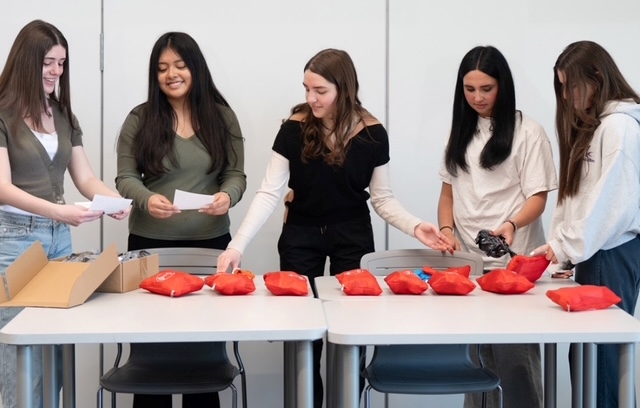
Sumner (middle), community members and volunteers assemble Hope Kits, packing each kit with the supplies needed to respond to a bleeding emergency.
MeetDaily Point of Light AwardhonoreeSumner Silver. Readherstory, and nominatean outstanding volunteer or family as a Daily Point of Light.
Sumner Silver, an 18-year-old college freshman, is studying physics and astrophysics on a pre-med path while serving in Air Force ROTC with a goal of one day working at a space organization. She is friendly, driven, and well-spoken with a long list of accomplishments in and out of the classroom.
One would never guess she has spent the past few years dealing with the aftermath of a tragedy. But in the wake of a mass shooting and a personal loss, Sumner turned her grief into drive, preparing people to save future lives by responding to traumatic bleeding before first responders can make it to a scene. Someone with a gunshot wound or other bleeding emergency can die in minutes, making response time vital.
With Hope Kits, Sumner has organized more than 40 hands-on certification courses that have certified hundreds of people to care for such injuries. Her organization has also strategically distributed 1,000+ Stop the Bleed kits equipped with the supplies necessary to care for wounded people and raised more than $20,000 to support their work.
What inspires you to volunteer?
My synagogue has tons of volunteer initiatives, and my parents were really involved with one called Mitzvah Garden. We would plant produce and donate each week’s harvest to our local food pantry. It was instilled in me from a very young age the importance of getting involved in my community and helping those in need.
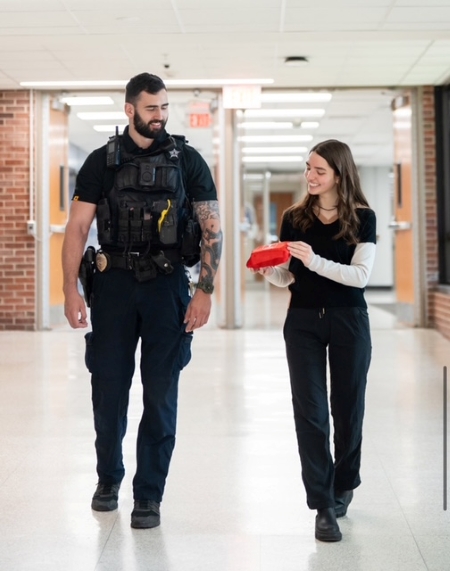
police officer from a department that partnered with Hope Kits consults with Sumner about the contents of the kits.
Tell us about your volunteer role with Hope Kits.
I organize all of Hope Kits’ Stop the Bleed certification courses. That means working with fire departments across the Chicagoland area on scheduling and creating outreach materials to bring community members in. We have participants ranging from freshmen in high school to senior citizens.
I also coordinate the assembly and distribution of kits. That involves working with local nonviolence organizations to identify communities that would most benefit from them, as well as working with experts like emergency physicians and firefighters to determine what supplies would be most effective.
Inside each is a CAT-certified (Combat Application Tourniquet) tourniquet with an instruction manual to make it easy for people who haven’t used one before. There’s gauze and bandages to pack a wound, gloves, and a marker to record the time of application on the tourniquet. In one round, we also included bandages specifically for the abdomen. Kits go to schools, places of worship, and businesses. We try to target the most at-risk communities–those with high rates of gun violence.
When I first started Hope Kits, I fundraised by creating Happy Notes greeting cards and selling them at local art fairs and stores. While I still sell Happy Notes, our main source of funds are grants we’ve been awarded from other nonviolence organizations and organizations that support Chicago initiatives.
What inspired you to get started with this initiative?
On July 4, 2022, a mass shooting occurred in my hometown of Highland Park, just north of Chicago. Afterwards, my local fire department began offering Stop the Bleed certification courses, and the firefighters emphasized how critical those first few minutes can be before first responders arrive. Learning about those simple skills really stuck with me. I wanted to give people the knowledge and resources to save a life in an emergency, which became the foundation of Hope Kits.
What’s involved with the certification?
It’s a two-hour course in which you learn how to apply a tourniquet and pack a wound with gauze and bandages on a limb versus in the abdomen. And there are tips and strategies about how to work in that scenario most effectively.
What’s been the most rewarding part of your work?
The most rewarding part has been hosting the Stop the Bleed certification courses in my hometown. Close to 2022, it was very clear how deeply the shooting affected my community. But it was equally clear how eager people were to learn how they could help in an emergency.
After the courses, community members often share their own experiences from that day with me and explain why they wanted to learn these skills. Those conversations remind me about a part of this work that started off as something more than the distribution of kits or hosting courses. In the aftermath of July 4, it was also about giving my community a way to turn something painful and tragic into something constructive.
What have you learned through your experiences as a volunteer?
People often underestimate how much they can do as an individual. Hope Kits is a testament to how, with the right skills and resources, one person can save a life.
Tell us about future partnerships, programs or events that you are excited about.
I’m at school in Florida at the moment, and we’re hosting a Stop the Bleed certification course for community members in the South Florida area in October. We’re trying to expand our presence here.
Any advice for people who want to start volunteering or, more specifically, help with this cause in their own area?
Look at your local fire department’s website. Our fire department just started offering the courses by themselves. You can also take part of the class online and do a skills-only portion in person to complete the certification.
Think about what you enjoy doing, and then figure out how you could use that skill to help. I loved creating art, so I raised money by selling handmade greeting cards at local art shows with Happy Notes, and then donated the proceeds to Hope Kits for supplies. Volunteering doesn’t have to look a certain way; it can be something that’s completely tailored to your interests, skills, and causes of interest.
What do you want people to learn from your story?
You don’t have to have a huge organization or a lot of resources to start making an impact. If you care about a cause, that drive can take you far. If a community cares about a cause, that really makes a difference.
MeetDaily Point of Light AwardhonoreeEleanor Shell. Readherstory, and nominatean outstanding volunteer or family as a Daily Point of Light.
Eleanor Shell, a 49-year-old ordained Presbyterian minister and mother of three, is intimately familiar with having a moment that changes everything. For two years, Eleanor has been recovering from a life-altering traumatic brain injury after being struck by a car. She’s in the midst of what she calls “the long middle,” the period of time after a crisis where things are still difficult without the expectation of improvement in the near future when life has moved on around you. It could be months. Or years. You’re often left overwhelmed and isolated.
This year, despite her own challenges and leaning on her instinct to help others, Eleanor founded the Borrowed Hope Foundation to support other families facing prolonged hardship after a life-changing medical, financial, or personal emergency. She creates experiences to lift their spirits and give them hope, reminding people that their community hasn’t left them behind. And, of course, she provides practical support.
To date, 35 families have been on the receiving end of Summer Fun Baskets and, if all goes as planned, 100 will be part of her Hope for the Holidays effort that will bring together local businesses, volunteers, artists, and donors to build moments of joy and connection.
Today, Eleanor estimates she’s functioning at about 60-70% of what she once was–she needs naps and time in a dark, quiet room–but she remains hopeful she will continue to improve in the years to come.
What inspires you to volunteer?
When you’re part of a community, it’s your responsibility to help make it better. I’ve always been involved; it fuels me. And serving others is a big part of my faith. I love people, and I’ve been lucky to always feel love and know love. I want others to have that.
What inspired you to get started with this initiative?
As a society, we’re pretty good in a crisis. What we’re not great at is later on. A couple from a church I’ve preached in is an exception. They continue to show up in big and small ways. Whether it’s a greeting card saying, “We still see you. You still matter,” or a grocery gift card, they’ve had hope for me when I haven’t had it myself.
Near the second anniversary of my accident, I was hitting a wall in my recovery. I’ve always believed that helping is healing, so a friend suggested we do something for other families in the long middle. We put together Summer Fun Baskets, and when a local with a newsletter wrote a story about us, the community showed up in big ways. What I thought was going to be a little project with friends ended up raising $18,000 in a week.
Nominated families have ranged from a family with two kids whose mom died unexpectedly, to someone coming out of a battle with cancer, processing the consequences. We focus on providing moments of joy and respite, because when you hit a crisis, your world slows or stops, but your children keep growing. There’s only one seventh birthday and only so many Christmases they still believe in Santa. If you’re not able to capitalize on those moments, they’re gone. I want people to have those memories instead of just remembering things that have been taken from them.
We provide everything from a gas card to get to the experience to snacks over Christmas break. We can’t make their problems go away, but we can give them moments to remember who they are.
Tell us about your volunteer role.
I do outreach to educate the community about the long middle and how to support people in it. I identify and connect with families, coordinate volunteers and community partners, fundraise and seek sponsors.
We recently launched our Hope for the Holiday campaign to provide things like a night at the movies or a visit to the Polar Express. We’re also working with summer day camps to make one or two spots available to our families in May, because planning ahead isn’t always practical when you’re in the middle of a crisis.
In February and March, we’re providing respite nights for grown-ups. For couples, that might be a date night. And we’re sending the gentleman whose wife passed away to Top Golf with a friend and providing childcare.
I also organize pop-up community art projects. In May, we’ll auction the art for Mental Health Awareness Month to show the role community and art can play in mental health.
What’s been the most rewarding part of your work?
It’s hearing how these simple things impact people’s ability to take the next step forward. One of the most surprising and meaningful things is when I send someone a gift card for ice cream or dinner with a letter that says, “We had a day that changed everything, and we’re still in the thick of it. We want you to know that someone in your community knows you are, too.” The response is often greater than when we give away bigger things.
Everyone needs love and compassion. We delivered one Summer Fun Basket to a high-income neighborhood, and the woman broke down in tears. Did she need snacks for her kids? Maybe not. But she needed to know she wasn’t forgotten because she isn’t able to participate in life as she had a year ago.
What have you learned through your experiences as a volunteer?
Community matters. And nothing will replace in-person connection and how that makes people feel. It just takes one person being vulnerable for others to do the same. Sharing stories helps people know they’re not alone.
What do you want people to learn from your story?
No matter how hopeless things are, there’s somebody who cares about you. And there’s something you can give. If we all do what we can on any given day, the growth of kindness, joy, and community will be exponential.
Life will never be the same for me, but I’m going to use whatever I have to continue to be what I was called to be.
This Volunteer is Helping Break the Cycle of Period Poverty
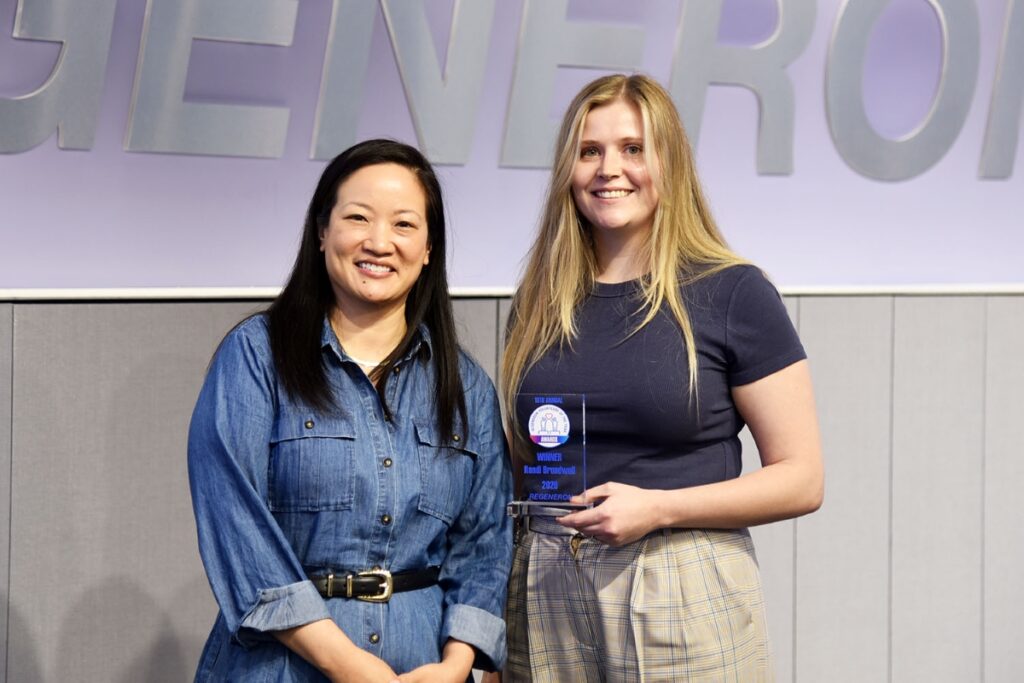
Randi (right) receives the Regeneron Volunteer of the Year Award in 2026 for her work with the MoonCatcher Project./ Courtesy Randi Broadwell
MeetDaily Point of Light Awardhonoree Randi Broadwell. Read her story, and nominatean outstanding volunteer or family as a Daily Point of Light.
Around the world, girls without access to period products often have to make do with whatever is on hand whether that be old rags, sponges or leaves. For many, that means staying home from school during their periods, and for some, it means dropping out altogether, closing the door on dreams of becoming a doctor, a teacher, or building any future they’d imagined for themselves. The MoonCatcher Project was founded to break that cycle, providing reusable menstrual kits, paired with health education, to girls in Kenya, Malawi and Uganda, alongside free period pantries across New York’s Capital Region.
Since joining MoonCatcher in 2024, Randi Broadwell has put her public health expertise and passion for volunteering to work for the cause, helping the organization track its impact and expand its reach. Her commitment carried her up through the board, from co-vice president to now co-president. Between governance, managing pantries, and coordinating fundraisers and volunteer events, she now dedicates around 400 hours a year, grounded in the knowledge that a single $7 kit can keep a girl in school for years.
What first inspired you to get involved with The MoonCatcher Project?
I did a public health volunteering fellowship in South Africa after I graduated from college, which inspired me to get my master’s degree in community-based primary health care. After that, I was looking for a place to use what I’d learned. Regeneron, where I work, has a volunteer week called Day for Doing Good, and I signed up for a MoonCatcher event in 2023. I’d already learned about period poverty in my master’s program, so it really resonated with me and it’s an organization local to me, so I felt like I could make an impact both abroad and in my own backyard.
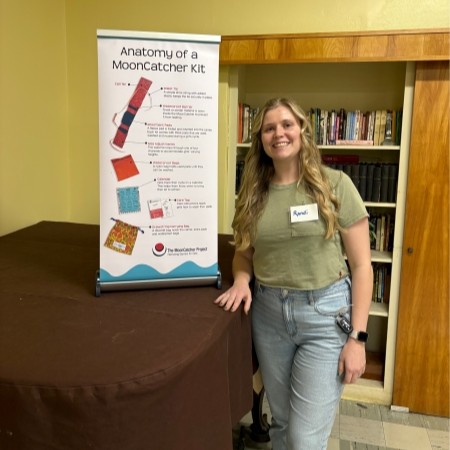
Randi stands in front of a poster that shows what is included in a MoonCatcher Kit./ Courtesy Randi Broadwell
Can you explain what period poverty is and what MoonCatcher’s mission is?
In simple terms, it costs money to safely take care of your period. If you’re already living below the poverty line, that’s another expense on top of everything else. In New York state, the average amount women spend on period products per month is about $15. Girls around the world often drop out of school because they don’t have a way to safely and cleanly handle their periods, and that keeps a cycle going. That’s why we give reusable kits to our global communities. The reusable kits are fitted to size, so girls can use them for five, six years or longer. In the U.S., people tend to prefer disposable products, so we stock free, 24/7 period pantries outside businesses.
What does your role involve day to day?
We’re a smaller organization, so as board leadership, I work with our bookkeeper to make sure the board understands our financials and can make informed decisions about funding. That connects to sending money to our sewing guilds in Kenya, Malawi and Uganda, looking at fundraising logistics, and community outreach and period product drives with local businesses.
Of all your responsibilities, which is your favorite?
I love events and talking to people, but my strength is really the data. Whether I’m pulling spreadsheets from the period pantries for a grant application or an end-of-year report, I love being able to show people the good we’re doing with the numbers we have. That’s my favorite part — showing people the impact and why it matters.
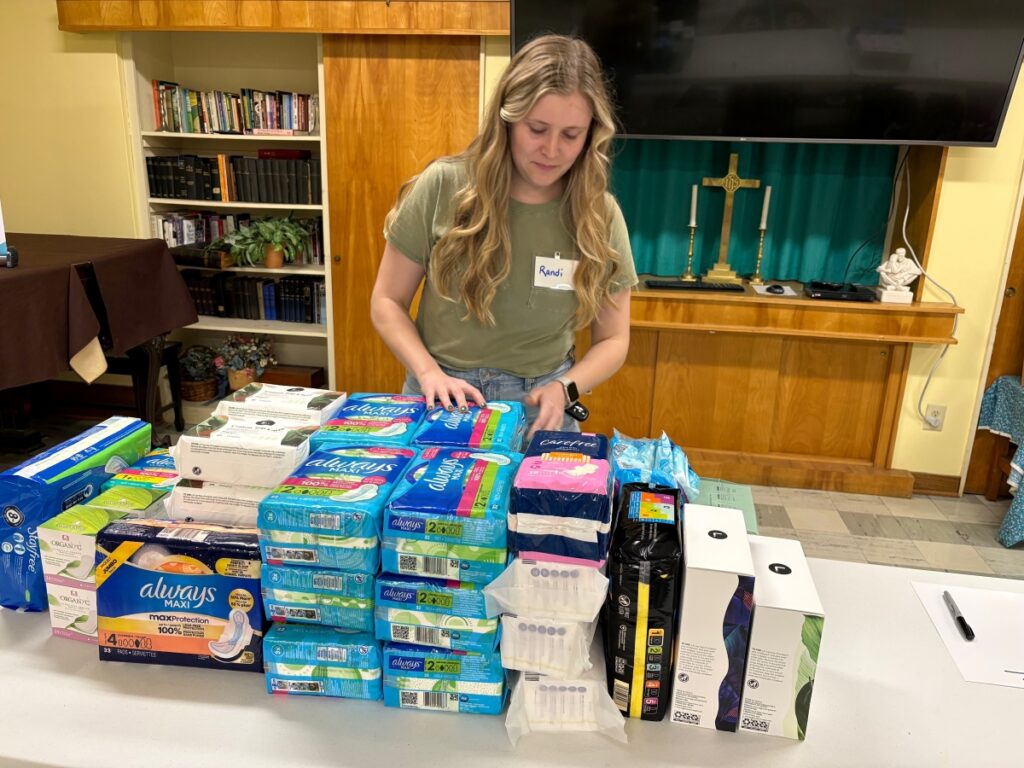
Randi counts disposable menstrual product donations at the birthday party of Ellie Von Wellsheim, founder of the MoonCatcher Project./ Courtesy Randi Broadwell
What kind of impact has MoonCatcher made?
Last quarter alone, we gave out more than 17,000 period products across our pantries in the Capital Region. Since I joined, we’ve added pantries in Troy and will soon open one in Saratoga. Abroad, I hear the stories from our executive directors who’ve seen the kits firsthand. Girls who no longer have to worry about missing school, who are dreaming about becoming doctors, going into hospitality, going into sales. Seeing that impact is what stays with me.
Why are you so passionate about equal access to period products?
It’s something so small that can make the biggest difference. We’re not just handing girls a kit, we’re creating jobs for the women in Kenya who sew them, and we’re pairing every kit with a health curriculum, so girls understand what’s happening with their bodies. A $7 kit is barely the cost of a cup of coffee here, but it can keep a girl in school instead of getting married off or going straight to work because she can’t manage her period. It’s about giving girls the chance to choose what they want to do with their lives.
What are your long-term goals for MoonCatcher?
I’d love for more people to recognize the organization and the issue of period poverty. So many people I talk to are hearing about this for the first time. In the next five years, I want more people to know this problem exists and to know MoonCatcher is the organization helping solve it.
What do you hope people take away from your story?
I hope people look more into period poverty. It’s one of the UN’s Sustainable Development Goals, and it hasn’t gotten much attention until recently, even though half the population bleeds. I also want people to know it doesn’t take a lot of money or time to change somebody’s life.
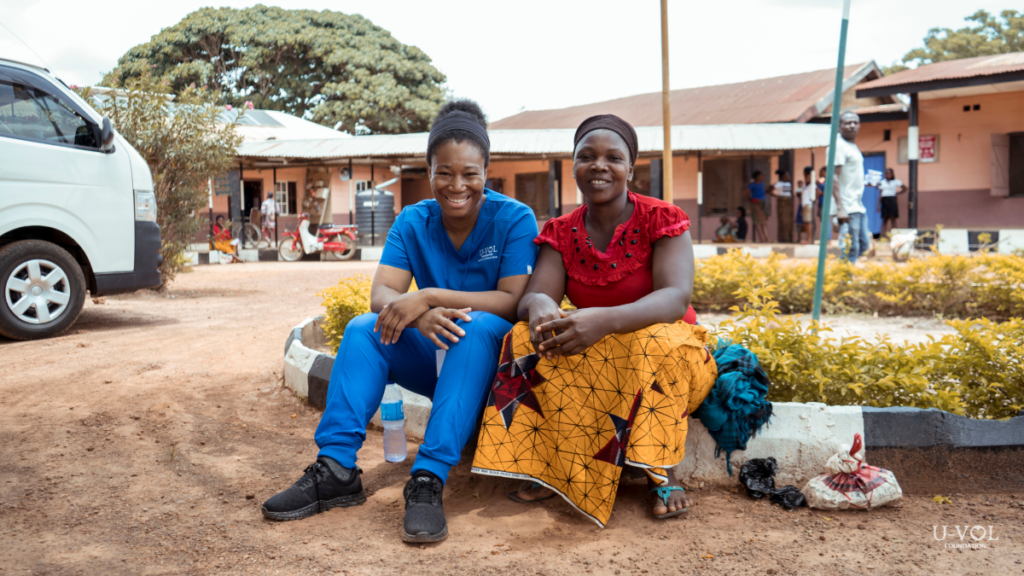
Faith Adole has led U-VOL Foundation without pay for more than 10 years, volunteering some 200 hours a month to bring free healthcare to the communities that need it most.
Meet Daily Point of Light Award honoree Faith Adole. Read her story, andnominate an outstanding volunteer or family as a Daily Point of Light.
Faith Adole founded U-VOL Foundation with the conviction to use what you have, start where you are, and bring others alongside you. More than a decade later, that set of core beliefs has grown into an entirely volunteer-led healthcare relief organization serving underserved communities across the United States and Africa.
As founder, board president, and a practicing nurse practitioner, Faith volunteers roughly 200 hours a month leading free medical outreach, health screenings, clean water initiatives, maternal and newborn health education, food distribution, and humanitarian medical missions. Under her leadership, which has all been free of monetary compensation, U-VOL has now mobilized more than 1,000 volunteers and raised nearly half a million dollars in funds and medical supplies. The organization reaches thousands of people while training local clinicians to strengthen care long after volunteers leave.
Faith believes that the work is less about single events than about relationships built over years – relationships built on listening first and working alongside people, rather than assuming you have the answers. What moves her most is the ripple effect of patients returning to school, clinicians gaining confidence, and volunteers growing into leaders who serve their own communities.
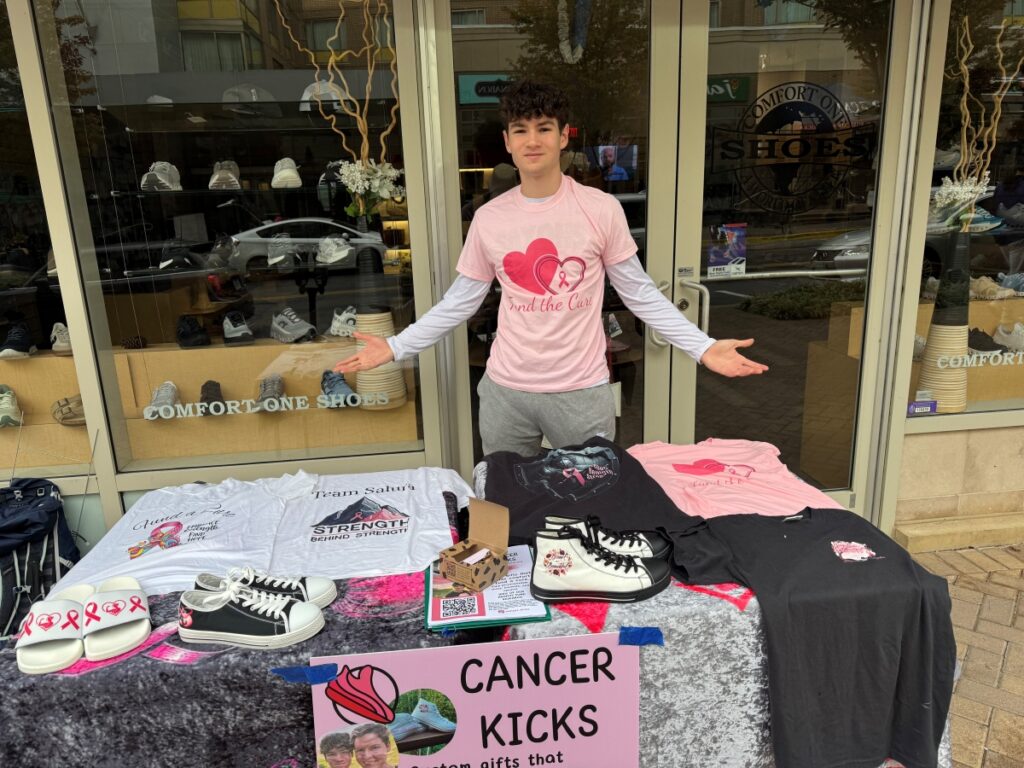
OWEN SINGER WORKS A TABLE OF CANCER KICKS MERCHANDISE AT A LOCAL BREAST CANCER AWARENESS WALK. /COURTESY OWEN SINGER
MeetDaily Point of Light Awardhonoree Owen Singer. Read her story, and nominatean outstanding volunteer or family as a Daily Point of Light.
Owen Singer credits breast cancer research for saving his mother’s life, and that’s why he’s doing everything he can to raise funds for it. When Owen was in eighth grade, he was faced with seeing his mother undergo cancer treatment again. By the end of the summer, when he was heading off to high school, he made his vision to fund breast cancer research a reality. He formally established Cancer Kicks, an organization that supports breast cancer research while providing comfort to those in treatment. With a catalog of more than 90 customizable products, including shoes, blankets, and apparel, every cent raised through selling Cancer Kicks’ fun merchandise is donated to the Breast Cancer Research Foundation. Thus far, he has sold more than 600 items and donated over $10,000 to the BCRF, funding more than 15 full days of cancer research.
When it comes to running the day-to-day of Cancer Kicks, Owen is doing it all. He handles everything from website development and product design to marketing and customer service. This totals about eight to 10 hours per week, which is no simple task on top of his busy high school course load. Despite the challenges, Owen is determined to keep going on the path to funding research. In fact, Owen’s experience running his own business that donates its profits to charity has directly informed his future. Now a senior in high school, Owen is planning on heading off to college next year and studying business. The knowledge he has gained running Cancer Kicks has instilled in him a variety of managerial skills, ranging from creative thinking to problem-solving, that will directly serve him in his career path. Owen’s dedication to volunteerism may have been inspired by his mother’s cancer battle, but it’s also a key part of the future he’s building for himself.
What inspired you to get started with this initiative?
My mom was diagnosed with breast cancer again when I was in eighth grade. Then she went through a mastectomy and also had to go through chemo. I watched her lean on small things to get through it, whether it was cold caps that helped keep her hair, heated blankets, or dyeing her hair pink and wearing pink Converse sneakers. It was her way of taking control of something out of her control, and that really stuck with me. I wanted to do something to turn it into something to help others and fund breast cancer research. That was how Cancer Kicks got started. I saw what she was using, and I was like, I can put the money towards a good cause instead of what I had already seen in the market, which is mostly people designing stuff to make a profit.
What inspires you to volunteer?
In terms of Cancer Kicks, breast cancer research is what saved my mom’s life. So I mean, that’s kind of my inspiration.
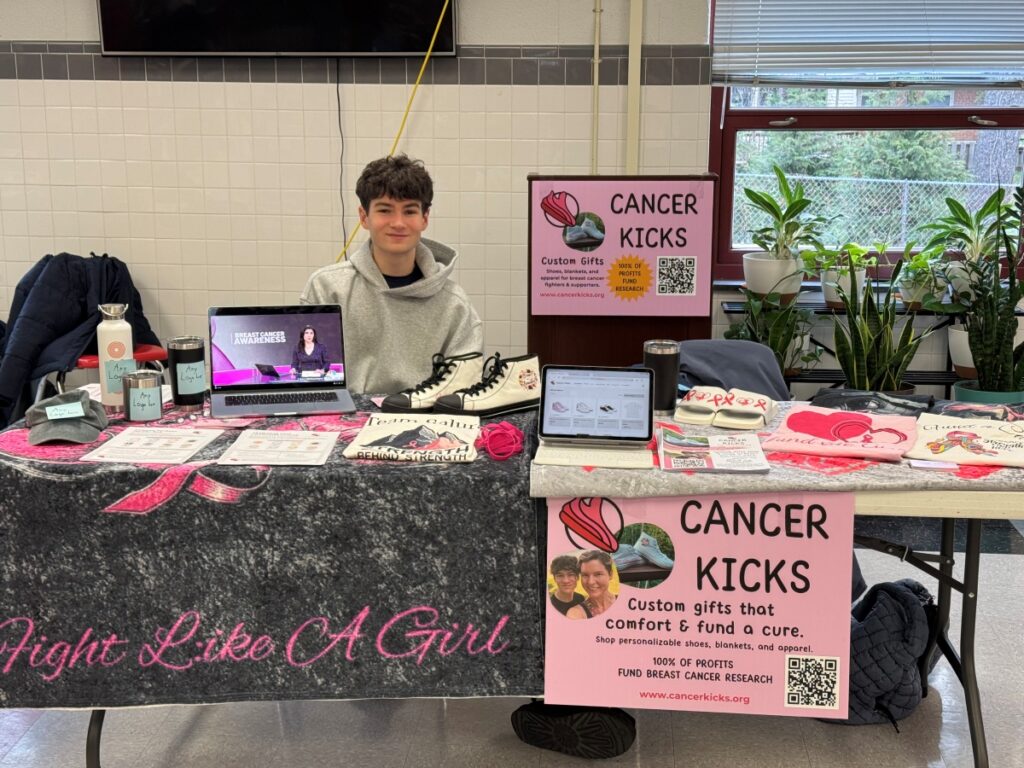
OWEN SINGER REPRESENTS CANCER KICKS AT A LOCAL HIGH SCHOOL’S HOLIDAY FAIR. /COURTESY OWEN SINGER
Tell us about your volunteer role with Cancer Kicks.
I’m the founder and the only member, so I do everything. We sell pretty much anything from hoodies and shoes to blankets and accessories. It’s all customizable. I run every part of it. I design the products, manage the website and the store, reach out to companies and organizations for potential partnerships, and handle customer and corporate orders. It’s continued to grow and grow. All the money goes directly to the Breast Cancer Research Foundation.
What’s been the most rewarding part of your work?
There’s the feeling of helping others. There’s also the closeness that has brought my mom and me together. It’s also hearing from people who’ve bought something and telling me what it meant to them. For example, someone who bought it for their wife who was going through treatment; she completely loved it and wore the blanket to every single chemo appointment. Every time I get a sale, or every time some sort of profit is made, it’s knowing the money went to a good cause.
What have you learned through your experiences as a volunteer?
I’ve kind of learned how to run a business. Not just having the idea, because I’m sure I’ve had plenty of charitable ideas. But I’ve learned how to build a website, manage the whole supply chain, and everything from shipping stuff directly to consumers to handling when things don’t go right. It’s through this whole experience, not just through Cancer Kicks, that I also learned more about stepping up. While my mom was in treatment, I had to step up on my own, whether it was just arranging my rides to basketball practice via my friends’ parents. That kind of carried over to how I run Cancer Kicks.
Why is it important for others to get involved with causes they care about?
I think everyone’s had something that’s touched them personally. You don’t need to be an adult. I think I was either 14 or 15 when I started this. I didn’t need to be an adult to do anything. I had help with some of the legal side, but you don’t really need to have a ton of resources to make a difference. I started with a product idea, and honestly, I don’t put a ton of money into it, and it’s turned into something that’s donated over $10,000 to breast cancer research. The small steps add up faster than people might think.
Any advice for people who want to start volunteering?
Start with something personal. Being personal to you definitely helps with both motivation and the cause. Be prepared to do everything yourself. It depends on your product, but for me, I did all the designing, marketing, outreach, and the legal stuff. I didn’t wait until I had a team. It started with an idea and just expanded from there. One more thing I would say is don’t be afraid to ask people, whether it’s for them to eventually buy a product or a partnership. The worst case is they can say no, and like a lot of people do end up saying yes.
What do you want people to learn from your story?
I would say that you can turn something bad that’s happened in your life around.
You’re able to make a bigger difference than you might think, no matter what your age might be. You can make a difference doing anything, really.
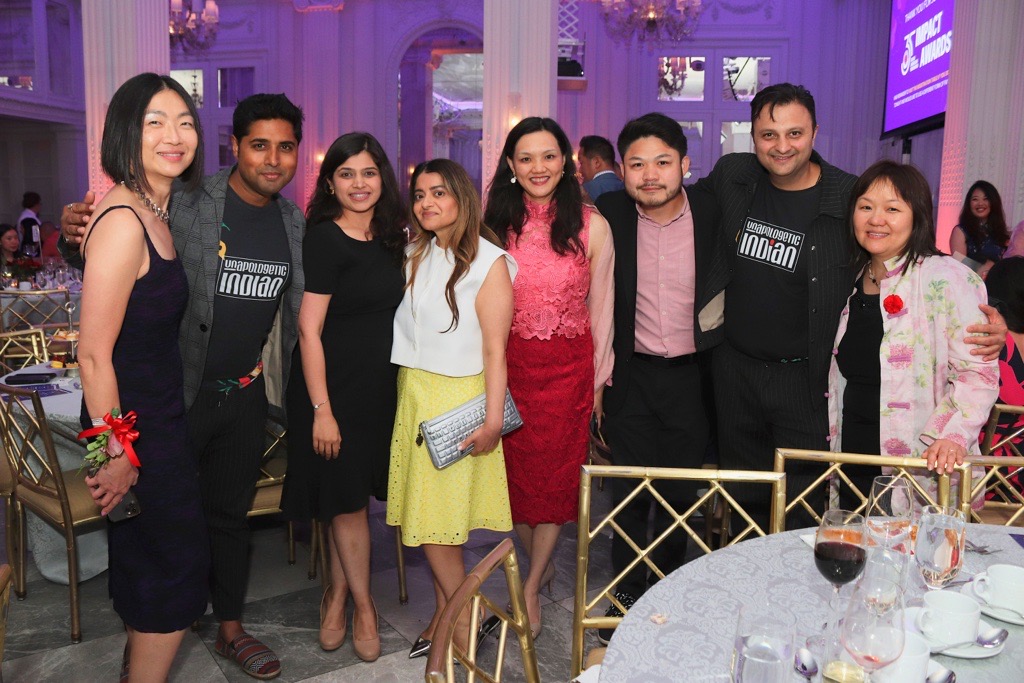
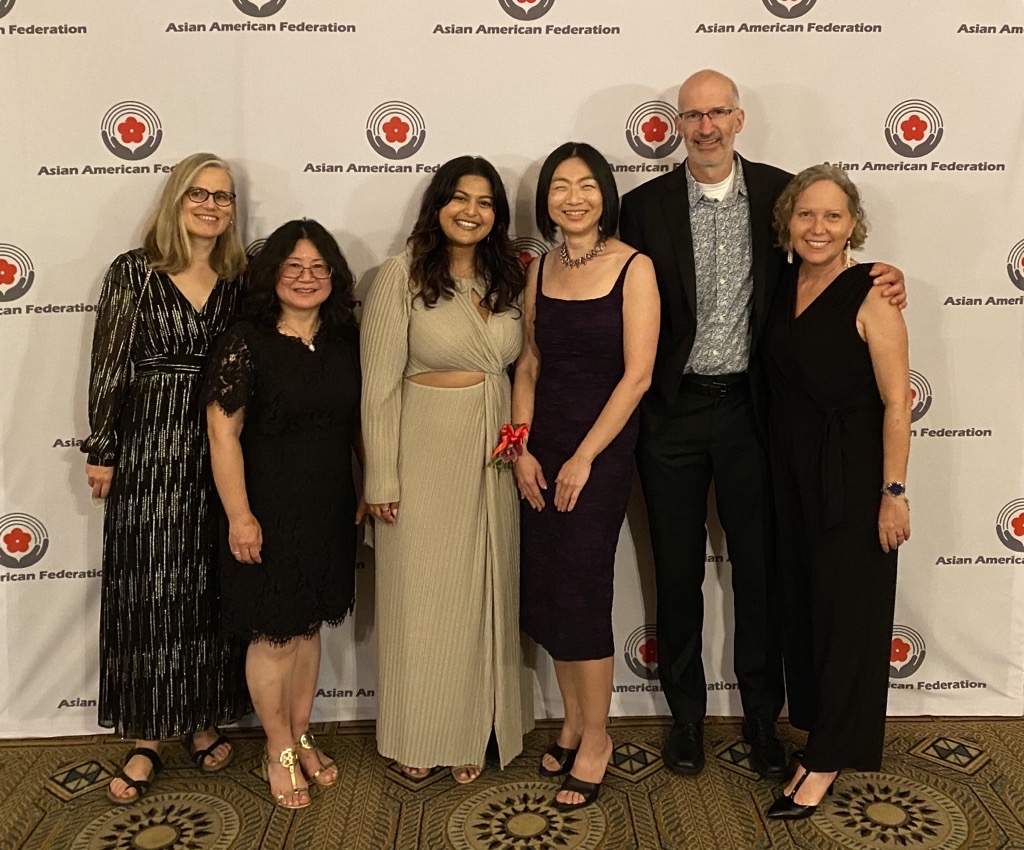
JEAN SIAO (LEFT) STANDS WITH HONOREES AT THE ASIAN AMERICAN FEDERATION’S GALA. /COURTESY JEAN SIAO
MeetDaily Point of Light Awardhonoree Jean Siao. Read her story, and nominatean outstanding volunteer or family as a Daily Point of Light.
Jean Siao wants AAPI New Yorkers to have every opportunity to succeed in their city, and she’s doing whatever she can to make it happen. As the Board Secretary of the Asian American Federation, an organization whose mission is centered on amplifying the influence and enhancing the well-being of the pan-Asian American community, Jean guides the CEO on goals and budgets, advises on strategy, and fundraises year-round, especially for the Impact Awards gala. Pulling from the detail-oriented nature of her professional career as a scientist, she diligently prepares for the monthly Executive Committee meetings and quarterly board meetings, where she’s responsible for tracking tasks for the board committees, compiling meeting notes, and serving as a source of support for the Board Chair and CEO on organizational strategy, particularly in areas of research and data collection.
She also works to cultivate an active donor base, channeling funds into the organization so they can help to strengthen small businesses and direct service nonprofits, aid owners in navigating compliance and digital marketing, and turn data into insights that inform policymakers. During her time with the organization, Jean’s diverse accomplishments have included working on the federation’s Hope Against Hate campaign, which provides safety tools and advocates with government while aiding victims of anti-Asian bias. She’s also launched a Mental Health Awareness initiative and built the first local map of in-language providers, helping to advance civic knowledge and rights.
Looking forward, Jean hopes to continue being an active participant in crafting the future of the organization. They just hired a new associate director, and she’d love to be more hands-on with this person and craft the future direction of the research arm. Of course, she’s planning to continue fundraising and seeking out additional board members who can advocate for the organization. Jean believes there is plenty of work to be done ahead of her, and she’s eager to channel her passion for volunteer work into bettering her community.
What inspired you to get started with this initiative?
I went to an event with some work colleagues and met someone at this event, and she turned out to be the chair of the board of directors at the Asian American Federation. We started talking about current events in 2017, and we talked about what we cared about in terms of socioeconomic situations in the country. Then, I went to a couple of galas, which are fundraising events for the Asian American Federation, and I was blown away by the passion and the enthusiasm from both staff and the board of directors. I was inspired to join them.
What inspires you to volunteer?
I’ve always liked the idea of volunteering, but never really had time. I would instead donate money, especially once I started working after school. But I felt at the time that I really wanted to do more for my community and to do more to amplify our voice in the community where we live. Also, as a scientist, I’m very passionate about data. The federation actually has an arm of the organization that’s dedicated to collecting and analyzing data and then publishing reports on it. That, plus the fact that I wanted to do something for the community, made me decide I wanted to devote the time to this. Initially, it was four board meetings a year, so it wasn’t really tough. Once I joined the executive committee as secretary, that took that started to take more time.
EAN SIAO (CENTER) STANDS WITH HER WORK COLLEAGUES, WHOM SHE INVITED TO JOIN HER AT THE IMPACT AWARDS TO CELEBRATE THE FEDERATION. /COURTESY JEAN SIAO
Tell us about your volunteer role with the Asian American Federation.
It’s a lot of meetings. It’s great because we get to really talk about the ongoing activities, celebrate the successes, and plan for the future of the federation. Big-picture-wise, it very much feels like I’m making a difference both to current goings-on as well as helping to plan the future direction of the organization. Practically speaking, most of it is trying to get other board members to take action. It’s really joining in whenever I can with ideas or suggestions or taking on actions that we end up discussing. Then the other part of what I do is actually fundraising. We have one fundraising gala a year, and we also do regular fundraising events throughout the year. I talk with folks that I know or organizations or groups that I know to see whether or not I could drum up funding for the organization.
What’s been the most rewarding part of your work?
Interacting with the hardworking and very passionate staff. The federation has member agencies and partner organizations in the community, and so I also get to meet the staff and some of the community members that they serve. The federation ourselves aren’t always making contact or connecting with individuals in the community, so it’s really impactful when I get to meet the people that we serve and the staff that is out there day to day doing the hard work.
What have you learned through your experiences as a volunteer?
I’ve learned that volunteering is hard, but making and maintaining those connections that I have started is really important for any initiative, whether it’s networking for work, networking for fundraising, or other goals. Maintaining those relationships is really important. I’m constantly making outreach and reinitiating contact just to say hello.
Why is it important for others to get involved with causes they care about?
I think It’s because it’s really satisfying to be working on something. Giving dollars is really nice if you can do it, because it’s also satisfying in a way. There’s a concrete, tangible goal for giving that money, but giving time is probably even more impactful for me, partly because we don’t have that much time, so every minute does count. Also that it’s just an additional point of satisfaction that I’m doing something that makes a difference. It’s something that I care about, and it’s goals and people that I care about. It just makes that much more important for me to do.
Any advice for people who want to start volunteering?
Sign up for something that they do care about. Figure out if it’s food insecurity, combating poverty, or education. Whatever it is they care about, find that first volunteering effort. That very first touchpoint establishes that contact, and it should only take a couple of hours, but it’s so worth it. Hopefully that’ll get them going to do more and more and more.
What do you want people to learn from your story?
Volunteering can take on so many facets. There are so many ways that we can contribute to the community. It’s whatever I could give at the time. When I was still in school and I couldn’t afford to contribute financially, I would give $10 to the food pantry, or I would volunteer a couple of hours on the weekend repacking food. But once I was able to make that financial contribution, that is what I ended up doing. What I want folks to know is what I’ve learned, which is that whatever way I could help others is the most impactful way. It really doesn’t matter what that looks like or how much that is. It’s what I can give at that moment.
Meet Daily Point of Light Award honoree Noreen Hosny. Read her story, and nominate an outstanding volunteer or family as a Daily Point of Light.
Noreen Hosny’s background in molecular biology and visual arts might not be the most common combination you hear of, but she’s using those skills to change the world. Fascinated by art from a young age, Noreen was always intrigued by how graphic design can influence the way we process and understand information.
Noreen Hosny founded a pro bono educational design initiative focused on improving health literacy by making information easier to understand.
In 2019, she established a pro bono educational design initiative focused on improving health literacy by making health information easier for patients and families to understand. But it was during the COVID-19 pandemic that Noreen really started to make headway. In a period when organizations weren’t able to do the typical fundraising and live events that helped them function, Noreen stepped in to help.
She’s partnered with more than 30 clinics and nonprofits nationwide to create everything from information on hyperbaric oxygen therapy for veterans with traumatic brain injuries to cancer prevention materials for use in New Jersey free clinics. Noreen is now designing donor-facing materials and annual reports for organizations, giving them the power to successfully fundraise and make a bigger impact. Thus far, she’s saved these organizations more than $90,000 in design costs.
Looking forward, Noreen has a ton of projects in the works. She wants to teach others about graphic design, and she’d like to host more workshops where people can learn the skills. She’s already partnered with some local organizations and taught K -12 students how to make infographics. But there’s also one major endeavor in front of her: medical school. While Noreen always knew she had a sense for science and the arts, her ability to combine her skills to make an impact through volunteerism demonstrates an acute awareness of how one’s innate skills can make a difference. There’s no doubt she’ll continue this mission in her medical career, which has been vastly informed by her passion for serving others.
What inspired you to get started with this initiative?
I’ve always loved visual arts, drawing, and painting. I took a digital arts class in high school, thinking it would be something like Disney animation, and it ended up being more about graphic design. I really became fascinated by how graphic design can influence the way we process and understand information. I remembered how they carefully design things like subway signs in the city. It just made me so excited, and I really wanted to apply what I had learned.
I started the pro bono educational design initiative in 2019, shortly after I took that class, and I started working with local organizations in my town. When COVID hit, I found out that a lot of organizations couldn’t do any fundraising or events with educational outreach, so I decided to expand it nationally and support those organizations whose outreach had been disrupted.
What inspires you to volunteer?
My design initiative is focused on improving health literacy, so my goal is to make health information easier to understand. Health literacy is really important to me, and, drawing on my own experiences, I see how making health information accessible can directly shape how people understand their options and make decisions about their care. When information is too technical or confusing, it can actually become a barrier for people to access the care that they need. I really wanted to volunteer to help bridge that gap using my own skills.
Tell us about your volunteer role.
I have my website, and I usually get requests through that. I meet with organizations, and I really get to understand their needs and the community that they’re serving. Then, I start researching the relevant scientific or clinical information that they want to share. Throughout those weeks, I’ll develop a lot of drafts, and I’ll send them a lot of different options, and we go from there and keep refining until they’re happy with it. Typically, they’re used in the initial consultation and patient guides. The patients will understand the benefits and risks of a procedure, and if it’s more like a community organization, then it would be used in their educational sessions. Basically, it’s working with the organization for a very long time to really understand their needs.
What’s been the most rewarding part of your work?
Seeing the materials actually reach the people that they were created for. I spend a lot of time researching, designing, and revising. I think the most rewarding part is when the leader of the clinic or nonprofit calls me, and they tell me a patient is using this resource, they’re really able to understand their options, and we’re moving forward with screening or whatever. I think that’s the most important.
What have you learned through your experiences as a volunteer?
Education and teaching someone is not a one-size-fits-all thing. You really have to understand the community’s needs, what they already know, and what barriers they might be facing. I learned that you really have to get to know the person that you’re teaching or you’re working with. As a person who’s going into medicine, I feel that’s really important, especially with patient education, making sure people understand their options and how to make decisions about their health.
Why is it important for others to get involved with causes they care about?
It gives you a chance to connect with people and learn from their unique perspectives. It really gives you a chance to contribute to something you care about. It’s rewarding to have an impact and make a difference in people’s lives.
Any advice for people who want to start volunteering?
Do a lot of reflection. Reflect on what you’re passionate about, what your values are, and what your unique skills are. Think about how to help your community and what causes you care about, and start locally by seeing which organizations need support and how you can fit in and help with that cause.
What do you want people to learn from your story?
Everybody has their own unique skill set, and there’s always a way to contribute. With my graphic design skills, I’d say I really try to maximize how much I can help, and that’s a good lesson for people. You might not think a skill could help somebody, but if you really become creative and think of how that could make a difference in someone’s life, then that could really be the start of a greater initiative.