
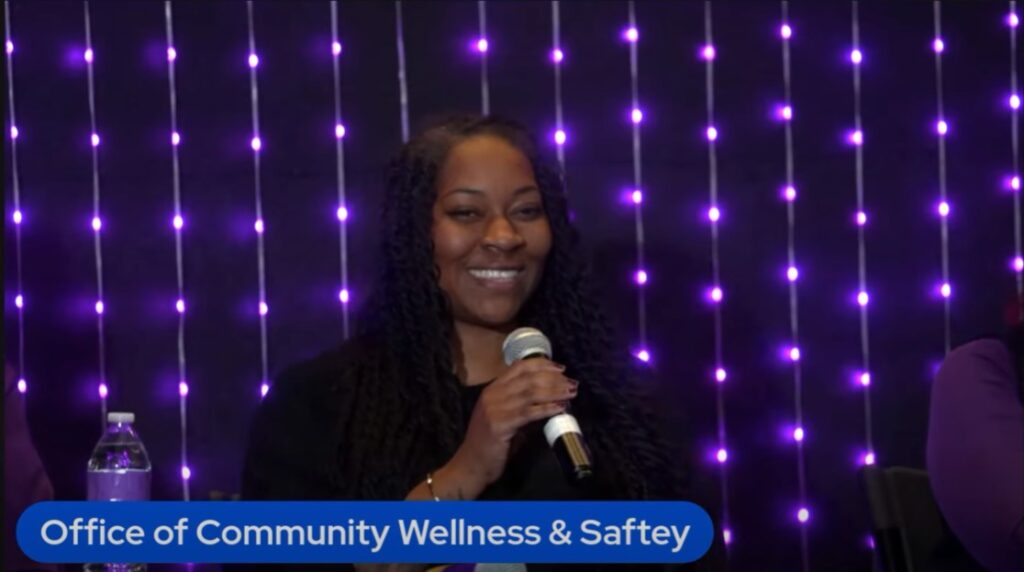
Meet Daily Point of Light Award honoree Jasmyne Bass. Read her story, and nominate an outstanding volunteer or family as a Daily Point of Light.
Content Warning: Points of Light is proud to share the following uplifting and inspiring story. However, we acknowledge that portions may be difficult for some readers. We encourage you to please care for your own well-being above all.
Jasmyne Bass, 36, has made a career out of helping others. Currently, she is an anti-violence advocate for the LGBTQ+ community. She’s the Multicultural Community Outreach Specialist at a sexual violence resource center, and she trains police on trauma-informed care. She’s also the Branding and Communications Coordinator for her statewide coalition to end domestic violence.
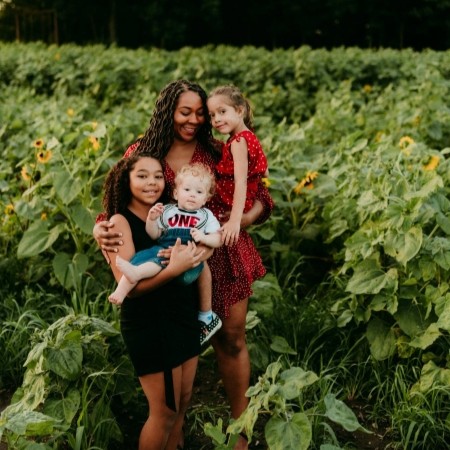
Helping others is inextricably entwined in Jasmyne’s “off” hours, too. As a mother of three, her kids are a priority, but she’s also been a foster mom, expanding her family to include someone who needed one. And she serves on the boards of the Washington County Foster Closet (WCFC) and the Homeless Serves Consortium of Dane County (HSC).
As a suicide prevention counselor for the Crisis Text Hotline, Jasmyne supports those in their darkest moments. Driven by lived experience, she uses her expertise to educate others through mentoring and presentations nationwide, highlighting issues affecting survivors of violence, historical trauma, and systemic harm as well as historically underserved communities.
Jasmyne’s dedication to change isn’t new. She has previously served on two other boards, one that ran a rehabilitation program for violent offenders and another that created space for LGBTQ+ people to build community in a conservative rural county. Nor is her commitment temporary. Her direct, one-on-one support changes lives, and her advocacy for systemic change will improve outcomes for years to come.
What inspires you to volunteer?
I was a foster youth, myself. I went to college for social work, intending to work with other foster youth, but after 200 hours of unpaid work at a domestic violence agency for my required practicum, I found my calling. I never left that work. But I did find my way back into the foster care system by becoming a foster parent and sitting on the WCFC board.
Tell us about your volunteer roles.
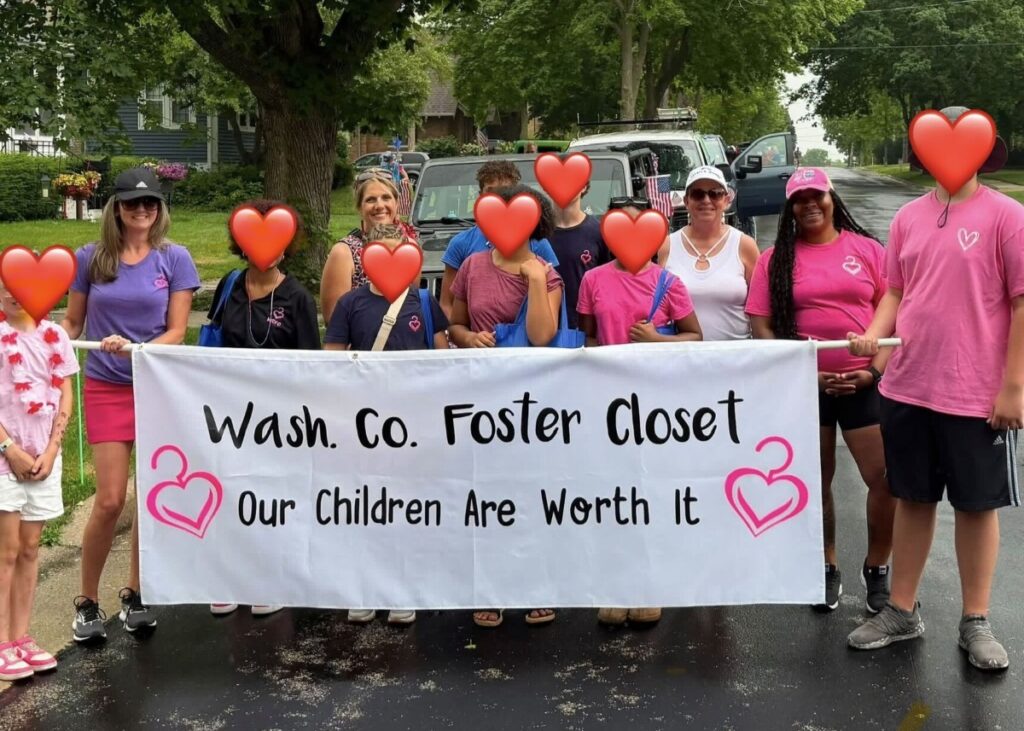
With WCFC, we discuss finances, trends, needs, and more at board meetings, and we talk to our volunteers. I support efforts that strengthen resources, visibility, and community support for foster families. Our board members do tabling as well. And if there’s an award that needs to be accepted or a bid for a grant, one of us will go.
We work closely with those in the Human Services building, with family courts and such, to connect with the people whom these decisions are affecting. Officially, we meet once a month, but we do a lot in between, like representing the organization in a local parade.
I also sit on the board for the HSC. We fundraise for local shelters and run a count of the unhoused every quarter to help us figure out the best way to allocate resources. We go over paperwork, listen to presentations, and vote on who gets funding.
As part of the Voices of Dane County Committee, I contribute to conversations and initiatives centered on representation, equity, inclusion. I ensure those with intersectional or marginalized identities have a voice and are being considered in decision-making.
Volunteering for the Suicide Prevention Hotline required specialized training. I answer my phone whether I recognize a number or not, because it could be coming through that line. Some days or weeks I’ll not get a single call or text, and sometimes I’ll get them back-to-back. When someone is contemplating suicide, I’ll send emergency personnel to them if there are high lethality indicators, or I’ll stay on with them until they either get connected with a trusted loved one or until they fall asleep.
What inspired you to get started with these initiatives?
Foster youth often fall between the cracks. I lived with the same family from age five to 18, but they made it clear it was not a long-term family situation. So, when I was 18, I had nowhere to go. I was unhoused until I was about 20 years old, when I got pregnant with my daughter.
My life is very good now, so I try to contribute to others through organizations that offer help but may not have that lived experience. I use that experience with the Suicide Prevention Line, too. I live with depression, and there were times when I’ve experienced the desire to end things. Knowing what I wish someone had said and what I needed at that time, I like to offer that space. I don’t often share my experience, because the focus should be on the person in crisis. But if they ask, I share, and there’s bonding that happens.
What’s been the most rewarding part of your work?
It’s the people I’ve met and being able to connect with them. And I’m seeing my work have an effect. We don’t see the final outcome when we do work, but when I volunteer, I do.
When I’m talking to someone on the hotline, at least in that moment, I know they’re okay. I get to see our foster families and hear about the connections being made. With the HSC, I’m making a difference with every vote I cast leading to more resources for the unhoused.
What have you learned through your experiences as a volunteer?
If you’re passionate about something, and you feel called to help, it can be as much or as little as you can give. It’s going to be appreciated no matter what.
Why is it important for others to get involved with causes they care about?
At the end of the day, it’s about uplifting and helping our community and everyone in it. This is self-care, because it makes you feel better mentally and emotionally. A lot of people are looking for purpose, so if there is a cause you feel passionate about, maybe your purpose is making yourself useful to that cause.
What do you want people to learn from your story?
Resilience and passion. We can take our experiences and do something positive with them. I could have easily let myself continue down a darker path. But instead, I took the things that happened to me and turned them into motivation to make things better for others, because I know what it’s like.
Do you want to make a difference in your community like Jasmyne? Find local volunteer opportunities.