
Meet Daily Point of Light Award honoree Ransom Miller III. Read his story, and nominate an outstanding volunteer or family as a Daily Point of Light.
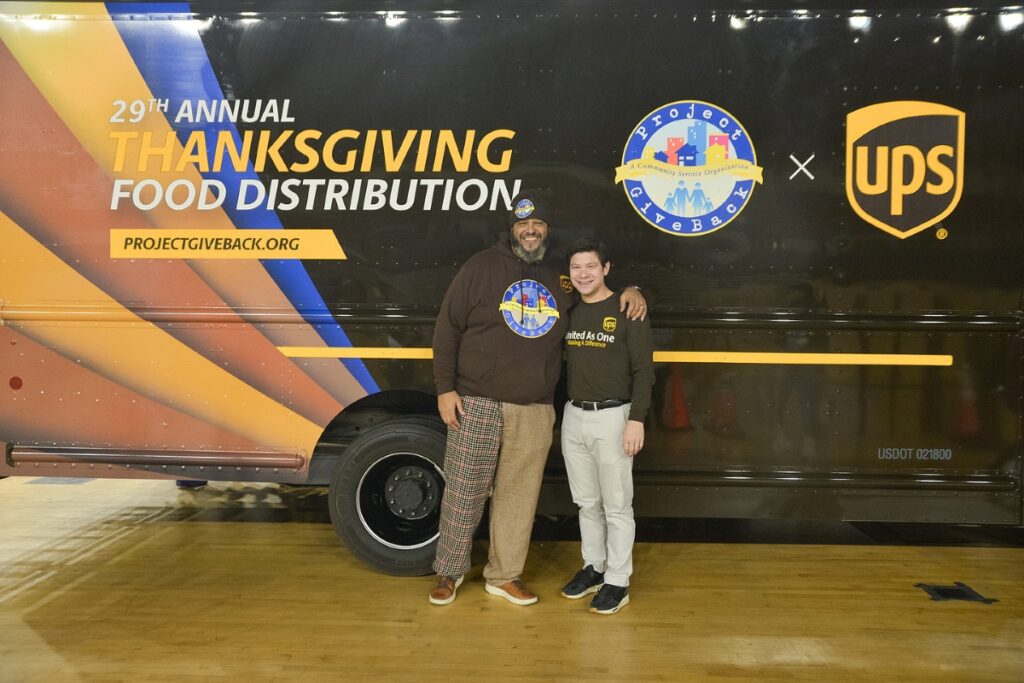
Almost 32 years ago, Ransom Miller III and a small group of friends put together six food baskets for families in Washington, D.C. He didn’t set out to build an organization – he just wanted to help a few families have a good Thanksgiving. But he and his friends came back the next year and the year after that, and the baskets grew from six to 10, to 25, to 50. Last year, that effort, now officially registered as Project GiveBack, distributed more than 5,700 food baskets to families across D.C., Maryland, Virginia, Indiana, and Oklahoma.
While working full-time as an executive director at EY, Ransom also serves as CEO of Project GiveBack, built around a simple mission: develop projects that help the community by creating a space where people can get involved in a way that fits their lives rather than overwhelms them. Beyond its flagship Thanksgiving basket distribution, Project GiveBack also runs a back-to-school supply drive, a homelessness support effort, a children’s book and toy drive, and a computer sponsor program. And Ransom dreams of expanding further still – to more communities, and to whatever needs he finds there.
What inspired you to start Project GiveBack?
The biggest inspiration was my upbringing. I was born and raised in the Baptist Church in Oklahoma, where my father was a deacon and trustee and my mother was on the missionary board. My father was in charge of the church’s benevolence committee, which helped people pay their light bills or get through hard times, and I got a chance to see that type of work early on. Then I went to Howard University, where truth and service is the motto, and I joined Omega Psi Phi Fraternity, where uplift is a cardinal principle. Each phase of my life reinforced that mindset, and that’s really how Project GiveBack got started.
What’s the mission of Project GiveBack?
To develop projects to serve the underserved. We wanted to create a vehicle where people could give back to the community in a way that’s not overbearing but still makes an impact. Early on, we learned you have to be organized and realistic about what you ask of people. Telling working people you need them every Saturday doesn’t work. So we built around one big ask a year — help us on the third Saturday of November for a few hours — and that’s more sustainable.
How did the Thanksgiving distribution grow into what it is today?
That first year, we distributed six food baskets to families in D.C. Fast forward to last year, and we distributed over 5,700 grocery baskets. In total, we’ve distributed over 42,000 grocery baskets, which equates to over 380,000 meals. We’ve had over 10,500 volunteers and over $2.4 million invested to fund community service projects. We don’t have any paid staff — we have a dedicated group of volunteers who coordinate the events and an army of volunteers who show up when we need them. I think our reputation for being efficient, and our partnerships with churches, community organizations, and recreation centers has let us reach places we wouldn’t otherwise touch.
How did the organization expand beyond D.C.?
About 15 years ago, a fraternity, Kappa Alpha Psi, came to me and said they wanted to replicate what we do in Alexandria, Virginia. I saw how passionate that group of men were, and we did our first distribution there. A similar thing happened with my own fraternity chapter in Southern Maryland. In Indianapolis, one of my Howard teammates, James Garland, who works for the NCAA, wanted to bring it to his community. And I’m originally from Oklahoma City — I finally connected with some fraternity brothers there who wanted to do something similar. This year, I have a goal of adding Tampa, Florida, too.
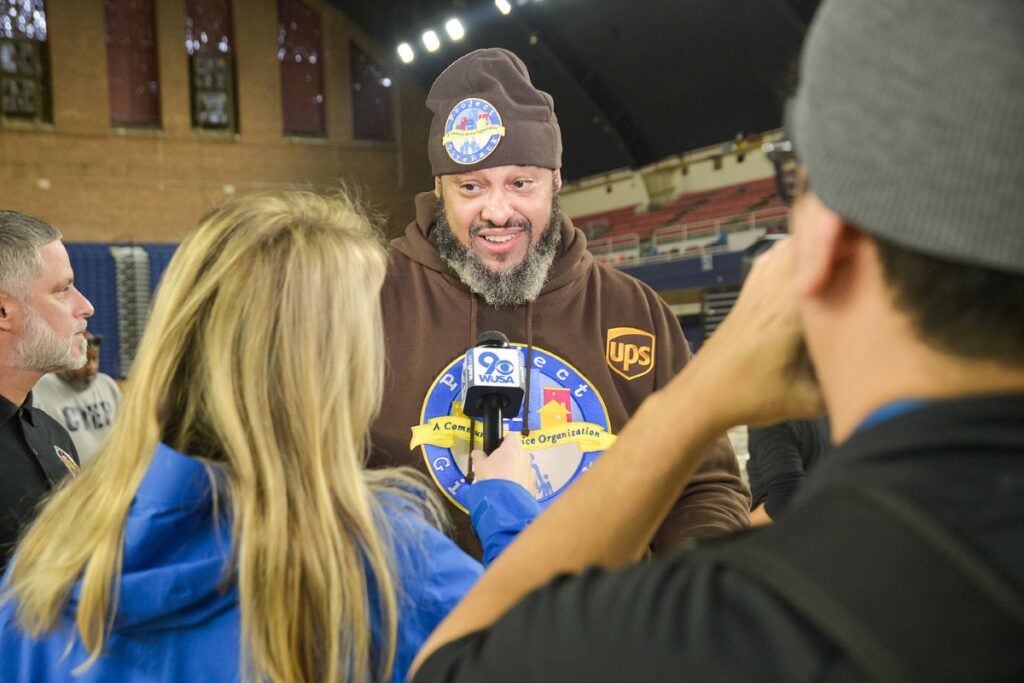
Tell us about the volunteer day itself.
We start around three in the morning. We pick up food from our partner warehouse by 5 a.m. and meet volunteers at the venue by 5:30 or 6. We unload trucks, stage the food, build boxes, and by 7 or 7:30, volunteers start assembling baskets —usually one poultry item, two to three other meat items, fresh vegetables and other canned items that are traditional around the holidays. And then quality control at the end to make sure every box has everything it needs, including a gift card. We’ve learned you have to have fun while you work like this, so we have a DJ starting at 6 a.m. and, this past year, a catering setup for volunteers. It’s a labor of love. Nobody gets paid, but people show up.
What’s a moment while volunteering that has stayed with you?
I had a friend who sent me a hundred-dollar check every year, one of the first people to give as soon as I sent the ask. One year I called to check in, and his voice cracked — he’d lost his job and couldn’t give that year. I gave him some advice and resources as a friend, but I also quietly added his name to our distribution list. When he received a basket, he called to say thank you. He never would have asked for it, but I knew his heart, and I couldn’t not help someone who had been so consistent in giving.
What role has your family played in Project GiveBack?
My wife is at the helm of making sure I’m up to speed on everything, and she’s shaped some of our best decisions, like adding cereal to the baskets when I wanted another meat item — she was right: kids loved it. My oldest son is involved in planning now. And last year, my son, who was 11 at the time, asked how many families we were feeding. I said 5,000, matching the year before. He asked, ‘Don’t you think we should do more?’ That was a good challenge, from an 11-year-old to a 55-year-old man who’d been doing this for decades. It became the mindset behind everything we’ve done since: do more for others.
What are your long-term goals for Project GiveBack?
Expansion is on my mind — cultivating what we’ve built in Indianapolis and Oklahoma City, and adding Tampa, Florida, this year. I also want to reach a point where I can take the lessons learned over the past 32 years and share them so more people can replicate this model wherever they are. While I was consulting in Buffalo, New York, I saw the homelessness around the bus station near my office and started organizing care packages there with a local pastor. It reinforced something for me: wherever your feet land, you should find a way to make a difference.
What do you hope people take away from your story?
I hope people take away the inspiration to do more for others, and the idea that the skills you use in your career — project management, negotiating contracts, planning events — are the same skills that make a difference in your community. You can be successful professionally and still bring that same focus on excellence to the work you do for others.
Do you want to make a difference in your community like Ransom? Find local volunteer opportunities.