
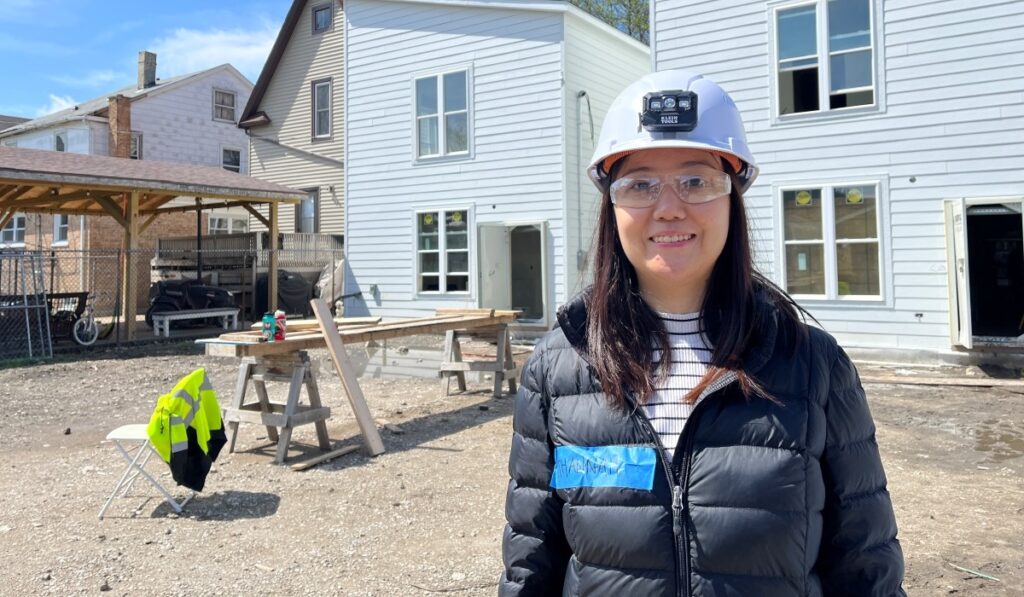
Meet Daily Point of Light Award honoree Ruthannah Wang. Read her story, and nominate an outstanding volunteer or family as a Daily Point of Light.
Ruthannah Wang, a 32-year-old electrical engineer, designs power systems for data centers. It’s a specialization she decided on when she saw the impact they were having on the world and decided to work on solving associated issues. In fact, finding solutions for community problems had long been a motivating factor in her life, even leading her to volunteer for some advocacy work with solar energy installations to support renewable energy efforts.
After graduating from University of Southern California, she started her career in LA, but it wasn’t all beach days and sunshine. The affordable housing crisis is impossible to miss in one of the most expensive cities in the country. So, when she was approached about developing the electrical design for the largest affordable housing project Habitat for Humanity has done in the region’s 35-year history, she jumped at the chance.
After relocating to Chicago, Ruthannah has continued to volunteer with Habitat, this time doing the physical labor of constructing homes in economically vulnerable neighborhoods, for about five hours a month since July 2025. She has secured over $1,000 for the organization through a matching program at her company, $500 for every 25 hours she volunteers. Her fundraising efforts and leadership in bringing new volunteers to builds led Habitat Chicago to feature her on their website.
What inspired you to get started with this initiative?
There’s an affordable housing crisis all over the country, but in LA, it’s particularly severe. In early 2021, I was presented with a pro bono opportunity to help design the electrical services for a 36-unit affordable housing complex Habitat for Humanity was building in Long Beach.
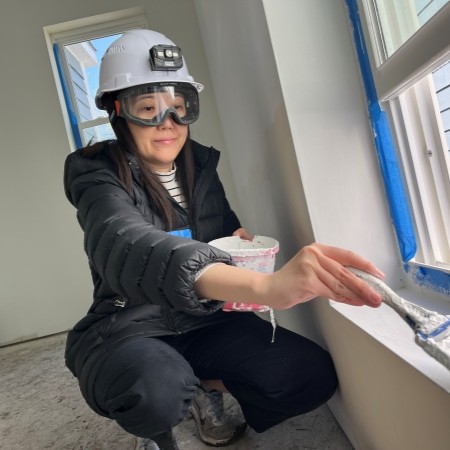
Since I spent my days designing power systems as an engineer, I thought it would be a chance to use the same technical skills to directly solve a problem in the community. So, I agreed immediately and worked on that for over two years.
I spent between 150 and 200 hours on the plans, and it showed me the tangible impact we can make when we leverage our professional expertise and skills for the community. It also hooked me on Habitat’s mission.
Tell us about your volunteer role with Habitat for Humanity in Chicago.
In LA, I was working on the electrical designs and coordinating the mechanical, electrical, and plumbing disciplines. But that was engineering drawings. I wasn’t actually building out in the field. Here, in Chicago, I am.
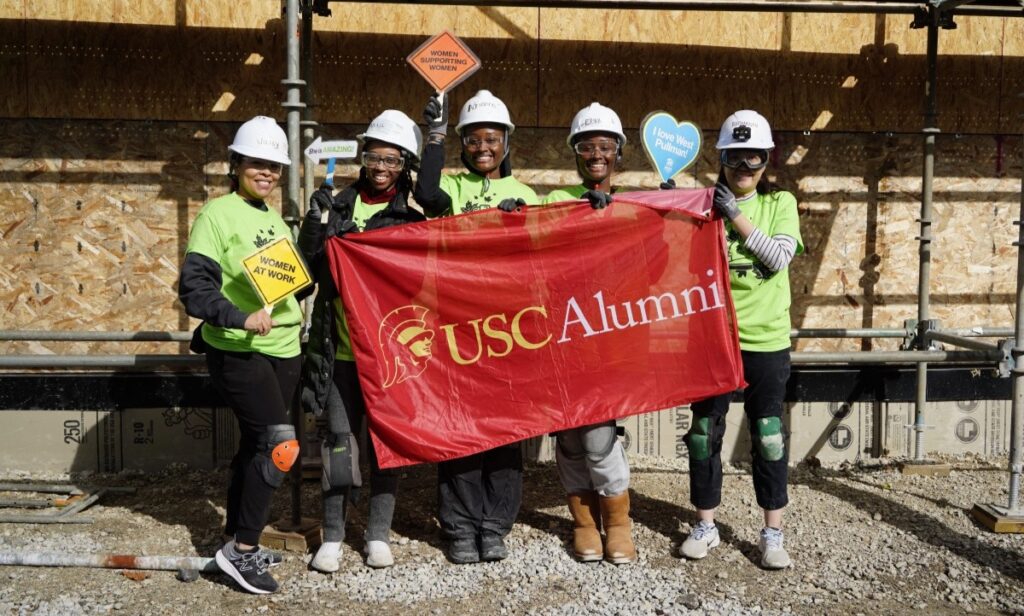
In March, I organized a build day for alumni from my alma mater, and I recently led an all-female group of USC alumni volunteers at an annual Women Build event hosted by Habitat Chicago.
Is doing the physical work on builds new for you, or is that part of your career?
I go on site visits to check progress, but I don’t actually get hands-on. It’s more like an inspection and site report. What’s exciting about volunteering at Habitat Chicago is that I can directly get involved with tasks like framing walls, cutting drywall, and building staircases.
What are your long-term plans or goals for the organization?
Our USC alumni chapters worldwide do an annual Day of Service, which was the impetus for the event I led in March. Because the chapter in Chicago just recently restarted, I would love to have a consistent partnership between them and Habitat Chicago.
What’s been the most rewarding part of your work?
It’s being able to look back at the end of the day and see physical proof of what you accomplished. In other places you volunteer, the results aren’t always immediately visible. But at the end of a day with Habitat, you can step back and say, “This wall was not here this morning, and now it is.”
What have you learned through your experiences as a volunteer?
There’s often a gap between designing a structure using software on a computer, and physically building it. I think being able to do both types of work through volunteering has helped me establish a bridge between the two.
That’s what makes my particular experience unique; I’ve been able to see the whole picture, and that’s been beneficial not only in my career, but also, generally. I think about how things work as a whole, not just from one angle.
Why is it important for others to get involved with causes they care about?
There’s a lot of work out there and a lot of really deserving organizations, but it can’t be done by just one person or even a few. It takes many. Having as many people involved as possible with a diverse range of abilities and skills is what strengthens volunteer efforts.
Any advice for people who want to start volunteering?
Every person has something unique to offer. There is an organization out there that’s in need of your specific skill set. It’s up to you to find where you can best contribute.
What do you want people to learn from your story?
I want to bring awareness to the affordable housing crisis. It’s not just about what’s currently happening but also–and what makes it personal to me–the historical context. It wasn’t that long ago that women and minority families were legally barred from securing mortgages or owning their own property. That’s one reason I’m so interested in this, and why I led a team for the Women Build event. I want to help make up this historical gap for people who haven’t had equitable access to affordable housing.
This problem has been around for a while. I just hope that by doing this, more people will learn about it. People take it for granted that everyone has a fair chance for home ownership, but it wasn’t always that way.
Having stable housing is the foundation of a person’s life. If that is secured, it creates a positive ripple effect, allowing access to quality healthcare and education and to building generational wealth. Habitat is taking major steps in raising awareness and directly contributing to alleviating the crisis by supplying more affordable housing.
Do you want to make a difference in your community like Ruthannah? Find local volunteer opportunities.