“Youth Can Lead Now”: Jen Landers on Building a Culture of Service in Colorado
Jen Landers has spent the last seven years helping high school students discover something many adults still struggle to believe: they already have what it takes to lead.
As executive director of
. CYL empowers teens to lead with courage and kindness, take action on issues they care about, and shape their communities with purpose.
But for Jen, this work isn’t just organizational—it’s deeply personal.
The Challenges Young People Face
“The young people in our community are navigating growing mental health challenges,” Jen said. “They’re navigating increased social isolation and lack of meaningful opportunities to connect with others and contribute to something bigger than themselves.”
At the same time, Denver metro communities face challenges that are happening across the country and around the world. Political, generational and cultural divides are making it harder to work toward shared goals.
Jen Serving alongside Young Leaders serving a meal to community members in partnership with Break Bread.
“As w
e look at our work, we want to find the intersection between those challenges. We want to figure out how we can really engage youth to feel a sense of belonging in communities, while we give communities the resources and talent of young people to help them solve their biggest issues and take advantage of their greatest opportunities.”
This simple insight, grounded in years of community-building, shapes how CYL works with young people. The organization doesn’t tell students where to serve—it gives them the space to choose, building resiliency, passion and confidence. Whether it’s environmental justice, food insecurity, or mental health, CYL meets young people at the intersection of passion and purpose. That trust not only keeps students engaged, but helps them grow into confident, community-minded leaders.
Learning and Connection Bring Insights for the Future
Earlier this year, Jen traveled to New Orleans for the
—her first time at the international conference where social impact leaders come together. Her attendance was made possible from a scholarship from Points of Light, with generous support from the
. The experience offered more than just inspiration. It provided a critical pause to reflect, connect, and realign.
“Receiving the scholarship for Colorado Young Leaders enabled us to do something that we would not have been able to do,” Jen reflected. “Our budget to participate in things like this is so small, but we recognize that really being able to have access to ideas and best practices is critical for us.”
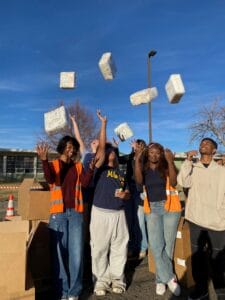
Young Leaders helping with a diaper drive for new parents in partnership with WeeCycle.
For an organization at a key point in its evolution, the timing couldn’t have been better. CYL is currently expanding its reach beyond the Denver metro area with a bold vision: to bring diverse youth together from across Colorado—not just demographically, but across lived experiences, political perspectives, and cultural backgrounds.
“The conference helped reenergize my passion for our mission,” Jen said. “I walked away with fresh insights and practical tools we’re already weaving into our strategic plan—everything from how we train mentors to how we tell our story.”
Jen knows that kind of growth won’t happen in isolation. It will take partnerships, mentorship, and a shared belief across communities that youth-led service is not a “nice-to-have”—it’s essential. That’s the kind of message she brought to the conference, and the kind she returned home determined to amplify.
Today, as she and her team move forward with new tools and deeper clarity, Jen and the team at Colorado Young Leaders remain focused on the young people at the heart of it all. Every program, every decision, every story is about helping them lead—not someday, but now.
Engaging Gen Alpha to the Silent Generation: Volunteer Strategies for Nonprofits
Volunteering brings people together from all walks of life, strengthening connections in community. Each generation has unique motivations and preferences when it comes to volunteering and understanding these can help nonprofits engage volunteers more effectively.
Last week at the
2025, Points of Light’s Senior Vice President of Strategic Partnerships and Convenings, Beth Pann, gave a keynote address on strengthening volunteer programs from a generational perspective. As nonprofits recruit volunteers to support their programs, here are things to consider when engaging with each generation.
Gen Alpha (Ages 12 and Younger)
What defines them?
This group is highly empathetic. They’ve been exposed to global challenges early on, which has fostered a strong sense of empathy.
Tips for Engagement
Connect them with young mentors. While most Gen Alpha volunteers are likely to be volunteering with their families, seeing slightly older peers volunteering will continue to inspire them. Think about other ways in which you can connect these young volunteers with their classmates and/or other Gen Z volunteers who are deeply engaged. Cultivating an interest in volunteering early on can build a lifetime of civic engagement.
Gen Z (Ages 13–28)
What defines them?
This generation is the first to grow up as digital natives and saw millennials engaging in more activism than Gen X parents. They are driven by causes including social justice, healthcare, mental wellness, environmental causes and more. They prioritize tangible impact, community involvement, and mentorship.
Tip for Engagement
Lead with purpose and authenticity. Volunteering is often a deeply personal experience, and Gen Z has helped to shape this idea. Find the spark to connect your Gen Z employees, community members and patrons in volunteering. For young professionals, integrating volunteering with skill and career development will be highly appealing.
Millennials (Ages 29–44)
What defines them?
Millennials have a passion for global causes and learning about social issues on a deep level. They seeing volunteering as a lifestyle aligned with their personal values. Points of Light’s Millennial Perspective research found that personal experience deeply influences the causes they care about.
Tip for Engagement
Offer micro-volunteering and/or family-friendly activities that resonate. As many Millennials are parents, micro-volunteering opportunities that are short-term and flexible, fit well into their dynamic lives. And make sure you get to know them. Millennials are deeply driven by their experiences, and care about making meaningful change.
Gen X (Ages 45–60)
What defines them?
Gen X is highly independent and pragmatic, valuing independence, and holds a bit of bureaucratic skepticism. They often volunteer for causes related to children, youth, or health.
Tip for Engagement
Propose hands-on and results-oriented projects. Gen X values leadership; and like Millennials and Gen Z, they value opportunities that fit into their work-life balance. Seek to engage them in fundraising, campaign management, team and/or committee leading opportunities. Make it easier for them by offering toolkits and streamlined communication.
Baby Boomers (Ages 61–79)
What defines them?
This group values the social and emotional benefits of volunteering. They bring a wealth of experience, skills and leadership. They see volunteering as a moral obligation and many believe in service as a legacy, passing down the value of volunteering to younger generations.
Tip for Engagement
Involve them in long-term leadership roles. Through board service or committee/campaign leadership, Baby Boomers seek to find ongoing impact as they leverage their personal networks and model civic engagement as an infinite contribution to communities and society.
Silent Generation (Ages 80–97)
What defines them?
They see volunteering as a duty to serve the community. They value face-to-face interactions and long-term commitments as a social connection they can uphold and actively contribute to. Many serve faith-based, military and local charity organizations.
Tip for Engagement
Provide structured and reliable volunteer roles. Daytime volunteering is a great option, as most are in retirement. These seniors bring a sense of pride to serving their communities, that stems from their community building after World War II.
The Opportunities of Multi-Generational Volunteering
Rather than seeing generational differences as a challenge, recognize them as powerful opportunities. While some volunteer experiences and impacts are immediate and tangible, like delivering meals or mentoring a student; others unfold quietly over time, influencing mindsets, relationships and even life paths.
Volunteering is dynamic, and that’s what makes it powerful. It not only changes communities but also transforms the individuals who take part in it.
Multi-generational volunteering is a powerful strategy to strengthen capacity, connection and engagement for nonprofits. Focus on what motivates your volunteers.
, provide incentives, and offer support based on their generational preferences.
It’s imperative to continue adapting programs to meet the evolving needs of volunteers and the communities they serve. Younger generations are primed and eager to co-create the future of volunteering. Engage with them!
By involving volunteers from different age groups, we can leverage a diverse range of skills, experiences and perspectives. This approach not only enhances the effectiveness of volunteer efforts but also fosters intergenerational understanding and collaboration, strengthening the social fabric of our communities.
Family Volunteer Day: The Power of Youth Involvement
Finding ways to bridge divides is essential in today’s world. One of the most potent tools for fostering understanding is civic engagement, particularly when it begins in the formative years of youth. Not only does volunteering mold responsible, aware citizens, but it also creates a culture of empathy and collaboration.
As
approaches, here are some things you should know about youth civic engagement, plus some resources to make it easy for you to get involved.
The Importance of Early Civic Engagement
When young people engage in their communities, they develop critical skills such as leadership, empathy and teamwork. They also gain an understanding of the challenges and diversities in their communities, learning to appreciate and work with people from different backgrounds and perspectives. This exposure is crucial for youth development, equipping them with tools they will use throughout their lives.
According to
, the national rate of youth volunteerism stands at 30.3%. This statistic is both heartening and a call to action. It shows that a significant portion of our youth are already involved in supporting their communities. It also highlights the need to encourage more young people to take part in civic activities to build a better, brighter future.
Bridging Divides Through Shared Action
Civic engagement is a powerful vehicle for bridging divides. When people from various backgrounds come together for a common cause, they learn to see beyond their differences. They share experiences, goals and the satisfaction of contributing to something larger than themselves. This shared sense of purpose is essential in building resilient communities.
The
issued an advisory from Surgeon General Dr. Vivek Murthy this year. According to the statement, “The physical health consequences of poor or insufficient connection include a 29% increased risk of heart disease, a 32% increased risk of stroke, and a 50% increased risk of developing dementia for older adults. Additionally, lacking social connection increases risk of premature death by more than 60%.” Clearly, the effects of loneliness are profound and cultivating community – especially among young people – can have a lasting and beneficial impact on mental and physical wellbeing.
Family Volunteer Day: A Starting Point
One of the best ways to introduce youth to civic engagement is through family-oriented volunteer activities. Family Volunteer Day is a day for families to work together in service. It offers an excellent opportunity for families to foster a sense of civic responsibility in children by engaging in meaningful activities and making a difference while strengthening their bond with each other and their neighbors.
Points of Light provides comprehensive
for planning volunteer activities. These resources make it easy for families to find and participate in events on Family Volunteer Day. Whether it’s cleaning up a local park, helping at a food bank or engaging in other community projects, these activities can help lay the groundwork for a lifelong commitment to civic involvement. You can organize a volunteer project with neighbors, at your school, or with community organizers.
Civic Engagement on Family Volunteer Day and Beyond
Civic engagement is a bridge that can connect communities. It starts with youth and grows through shared experiences and commitments to supporting communities around the world. As we approach Family Volunteer Day, you can use this opportunity to involve young people in community service.
By leveraging resources like the Points of Light toolkits, you can plan meaningful activities that foster understanding. To learn more about the impact of volunteering and lending your time and talents responsibly, check out our Civic Life Today issue on
platform, a database of hundreds of thousands of volunteer opportunities around the world waiting for individuals to step up.
Encouraging early civic engagement is not just an investment in individual development; it’s an investment in the future of our communities and our world. Together, let’s embrace this opportunity to bridge our divides, one act of service at a time.
The Power of Recognition in Civic Engagement: A Changemaker’s Perspective
I’ve been working to put an end to people experiencing homelessness since I was eight years old. I started Khloe Kares in 2015 as a way of working with people experiencing homelessness. We teach leadership workshops that build changemakers, and I take trips to Ghana where I install water pumps and bathroom facilities in schools that don’t have access to clean water. I never imagined I’d be able to make such a big impact, but after becoming Daily Point of Light Honoree #6663 and The George H.W. Bush Points of Light Award 2019 Honoree, I understand the importance of recognition.
Being a George H.W. Bush Points of Light Award Honoree has opened doors for me as part of my recognition, I received a grant that supported my work in Ghana to help end their water crisis. At the award ceremony I had the opportunity to meet Chelsea Clinton, daughter of former U.S. President Bill Clinton and former U.S. Secretary of State and 2016 presidential candidate Hillary Clinton. That meeting led me to a one-on-one interview with Secretary Clinton. Recognition like this made me realize that civic engagement is about more than just how good it makes you feel. It’s about how it motivates you and positions you to do more.
I know I would not have been able to reach as many volunteers or people to further my cause without recognition. One of my first times being recognized was when I went on this show called The Real, a daytime talk show. This opportunity led to me getting awards, grants and so much more, but that’s not what made me fully successful. You don’t have to rely on recognition to be successful, but it will push you further and grow what your organization can do. With everything that nonprofits do, volunteer recognition may seem less important, but I promise you, it makes all the difference for your volunteers and your organization. I make sure I always recognize those who volunteer and support Khloe Kares because I feel it’s crucial to recognize those who help build and support the work we do.
Recognition is the puzzle piece that all changemakers need to make their projects thrive. To maximize your impact in your community, you need support, which comes from others. Whether it’s through a partner organization, family, friends or other willing volunteers, the most successful organizations understand the value of recognizing their most invested supporters. These connections can open so many doors which lead to new opportunities in life. It’s important to build relationships in order to continue the support.
Points of Light has done a lot of research on social impact. And they collaborate with corporate sponsors like UPS, Bank of America, KPMG, and Starbucks. These are all major partnerships that support people, nonprofits and companies. These partners collaborate and uplift their employee volunteers by nominating them for the Daily Point of Light Award and when they’re recognized they bring awareness and opportunity to their employee volunteer programs. The Daily Point of Light Award has been able to change people’s lives, just by recognizing all the ways they contribute and volunteer. For example, 83% of respondents say receiving the Daily Point of Light Award made them feel appreciated while 48% say receiving the Daily Point of Light Award elevated their issue or cause. And 27% report that the Daily Point of Light Award attracted volunteers to their organization.
You can start to see how recognition is so crucial to growing your impact. And it works right into the Points of Light Civic Circle®, a framework that helps people connect to opportunities and understand that doing good comes in many forms. By putting the elements together, you can grow your impact in your community. When you’re recognized in a sector like this one, when you are put on the front lines your impact will spread like a wildfire. Even though recognition comes and goes you are forever contacted, supported or just have an overall community that surrounds you. Plus, when all can see your work, you’re able to motivate and inspire others to want to become changemakers. Whenever I feel as if I need some inspiration, I look to those around me. And when we all work together with that same mindset, we really can change the world.
I make sure to connect and work with other organizations, because working together helps us grow and create friendships and relationships. Points of Light connects nonprofits, corporations and individuals so that we can address the world’s changing needs together. They provide calls to action that keep you wanting to work with your community. Recognition is one of the things that started Points of Light — it’s at the heart of their mission, and it’s one of the ways to motivate volunteers that is closest to my heart.
Family Volunteering Insights for Small Organizations
We interviewed 1,000 participants of organizations with under $1 million in revenue
. We wanted to know how to create programs that work for families, how to recruit families to participate and how to make it easy – and fun – for them to volunteer.
Here’s what we heard from project coordinators we surveyed about how to engage families and young people in volunteer efforts:
Include Youth Voices When Planning Family Volunteering Opportunities
Talk to young people about why volunteering matters. Let their excitement help make it a family priority. Let them describe what they’re doing, and explain how they’re having an impact.
Communicate Via Multiple Methods Well in Advance With Reminders
Send an email and a text. Remind volunteer families several weeks before, a week before, a day before and the day of. People are busy, and reminders help ensure they fulfill their intention and their commitment to volunteer. If you can, keep your events at the same time of year to make it easy for families to plan and stay engaged year after year.
Create a Family-friendly Environment
Ensure families know that children of all ages are welcome. Make plenty of age-appropriate activities available and create opportunities for little ones to help. Provide kid-friendly refreshments, too.
Reward Volunteers
Create incentives for your volunteers to want to come back, and share the impact they’re having. Offer student volunteers extra hours if they bring parents, or feature students with families who volunteer on social media.
Start Early, Plan and Be Organized
Make sure people feel as if their time is being used well. If they have a great experience, they’re more likely to return. Some organizations don’t have a lot of success doing several small family volunteer events throughout the year in cities where there are so many competing interests. However, doing an “end of the year” project, for example, where students get to show off their work and win prizes, combined with the group volunteering experience, often results in higher attendance and participation each year.
Family and youth volunteer projects are so impactful, and getting them right makes a huge difference for families and for the people and organizations who benefit from their service.
4 Resources to Get Young Changemakers Engaged This Summer
Leading a civic life isn’t just about lending time and resources as an established adult. It’s also about involving youth, showing them that they, too, can make an impact, regardless of their age.
While young changemakers can stay involved all year long, summertime is prime time for kids to become more civically engaged. After all, school’s out, schedules tend to be more lax and there is ample time to fill with worthwhile activities. Plus, getting involved with causes you care about can be rewarding when done with those you love.
Fortunately, Points of Light has a wealth of resources for youth and families to get involved in their communities. Here are a few to get you started.
, a framework we created to show people that doing good comes in many forms. But have you taken a deep dive into each element of the Civic Circle in our free digital magazine series,
to publish nine unique issues, including interviews and articles from leaders in the field.
Best of all, at the back of each issue you’ll find a special section devoted to Youth and Family, with additional resources to explore. You’ll also discover a Personal Action Plan section, created in partnership with
, for your family members to figure out exactly how they can best leverage their time and talent for a specific cause area.
Find a Volunteer Opportunity
There are hundreds of thousands of volunteer opportunities throughout the world, just waiting for the right volunteer to step up. Some of these opportunities are in person, while others are virtual or a combination of the two. Points of Light offers the world’s largest digital network, allowing you to search for these opportunities in an intuitive, user-friendly interface.
database listing volunteer opportunities—inside and outside of the home—that meet critical needs. You can search for volunteer projects in your local area, or get inspired by what’s happening in other areas and start your own initiative.
, summer is a great opportunity to do so. With a variety of different kinds of projects, from creating a mobile library to cleaning up a local park to collecting old cell phones, there are ample options for kids of all ages.
Each DIY Project guide comes with an overview and a step-by-step guide, including materials and resources needed, as well as helpful tips along the way. Take special note of those “Pre-Project Discussion” questions. They can help you start a rich dialogue with your children that connects the “what” of the project to the “why.”
Celebrate Your Civic Journey
At Points of Light, we’re firm believers in the power of recognition. If your kids have taken the time to learn, grow and get more involved with causes they care about, that’s certainly worth celebrating! This celebration might look like getting ice cream after wrapping up that volunteer day, debriefing with some “wins” after completing your DIY project or maybe something even bigger.
Points of Light’s founder, President George H.W. Bush created the
to honor ordinary individuals doing extraordinary things. If your family knows of someone in your community who is leading and lending support in the volunteer space, nominate them for a Daily Point of Light Award. (Psst – you can also hold your own “award ceremony” as a family, giving each member special recognition for something unique that they brought to your volunteer activity.)
However your family chooses to get engaged, know that you are setting a wonderful example for a life of service. Many nonprofit founders and recipients of the Daily Point of Light Award reflect on how concepts like volunteering and donating were taught early on and became ingrained in them from a young age. The seeds you’re planting today could lead your kids to a more active, civically engaged life for decades to come.
Changemaking in Action: Highlights From The 2022 Youth Summit
was filled with memorable moments, but one that stood out in particular was this year’s Youth Summit. In case you missed it, here’s a recap of what went down… Don’t forget to mark your calendar for June 14-16, 2023 so you can be in attendance at next year’s Conference.
with the day’s Daily Point of Light Award for her efforts in environmental conservation.
“With the right support, young people, you are changing the world,” Natalye said, before handing things off to President and Board Chair of KPMG Foundation Anita Whitehead. Anita introduced the various ways the KPMG Foundation has revitalized its mission and poured funding into equity and diversity efforts, committing millions of dollars to this focus.
, 2021 Time Kid of the Year and Ambassador for Kindness, who spoke about his personal journey and gave helpful advice to any young person looking to make a change.
“Sometimes, I have to admit, it’s not easy seeing a problem so large and figuring out how to go out there and make a big impact on that problem,” shared Orion. “But I think that with a little determination, perseverance, courage and compassion, you can really do anything.”
He encouraged young people who see problems they want to fix to be proactive, reaching out to adults who can help them secure the resources they need to contribute their talents and energy to that issue. He also encouraged adults with resources to support kids with a vision, as the power to change the world lies in this type of collaboration.
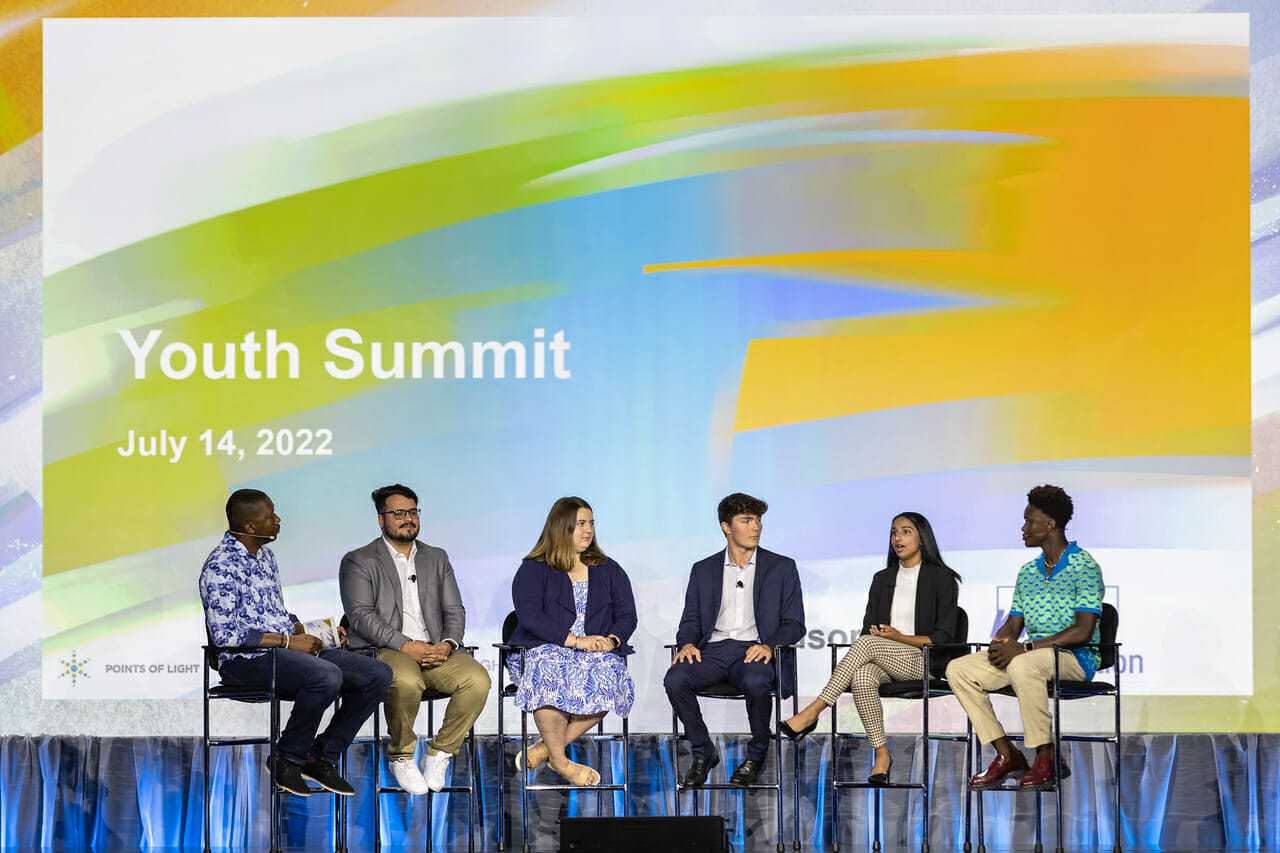
Following Orion’s chat with Anita, four members of the Points of Light Youth Council—
—and Generation Amazing Youth Advocate Sayed Alam—joined a moderated panel discussion. Each spoke about their individual civic journeys and shared touching moments from their experiences.
From fostering hope in communities through uplifting words and gestures… to reinforcing the message that we are never alone, but supported… to releasing one’s ego in volunteering and learning to be a team player… these five leaders passed on a wealth of knowledge and encouragement for all the civically engaged youth in attendance. “Embrace the vulnerability of not knowing what you’re doing,” shared Adom Appiah.
One theme highlighted again and again was the importance of listening and learning before acting. Several Points of Light Youth Council members spoke about how their nonprofits or initiatives had changed as the leaders themselves continued to learn and grow.
Eleanor Ann Schoenbrun talked about “allowing the experience to evolve” with her – changing what she was doing as she continued to learn more and more, and honoring the people sitting across the table from her, even if she disagreed with them.
Hearing from community members about what would help them most, instead of assuming that they already knew what was most supportive, was illuminating for these leaders. Many times, they made strategic decisions for their volunteer projects or even revamped the structure of their nonprofits based on the feedback they heard from those they were directly working with.
While this year’s Youth Summit featured a powerful group of young leaders, Points of Light is committed to uplifting youth voices every single year at the
. So don’t miss next year’s conference in Chicago June 14-16, 2023—save the date now so you can join us in person.
The Power of the Youth Voice with 2021 Time Kid of the Year
The Points of Light Conference is a rich experience for civically-minded folks of all ages and with all levels of experience.
We value the voice of youth, which is why we host a special Youth Summit as part of our overall conference experience each year. This summit is an all-conference session that will feature inspirational stories from young civic leaders who demonstrate that age has no limit in addressing the issues facing our world.
KPMG Foundation President Anita Whitehead will open the session with a discussion with Orion Jean, 2021 Time Kid of the Year and Ambassador for Kindness, about his story and what guidance he has for other young people.
This young man is on a mission, sharing the gift of reading with hundreds of thousands of kids. At only 11 years old, Orion has already created waves in his community with his involvement and advocacy. He has used his $500 in prize money from a kindness contest to donate toys to a local children’s hospital. He has also hosted food drives and partnered with a relief group to collect 100,000 meals for Texas families. And now he’s focused on spreading the gift of literacy to local households that may not have access to books.
Following the keynote, four members of the Points of Light Youth Council – Esha Venkat, Chase Hartman, Eleanor Ann Schoenbrun and Adom Appiah – will participate in a moderated panel discussion around the theme that youth are a powerful force for change. They’ll discuss listening and learning, mindful engagement, finding your “why” and “how” and much more.
Esha Venkat is a 16-year-old global changemaker, ambitious servant leader and groundbreaking “girlpreneur” passionate about advancing social progress across the globe. She is the co-founder and COO of NEST4US and a junior at Broad Run High School. In 2020, Esha and her sister, Shreyaa, were recognized with The George H.W. Bush Points of Light Award for their servant leadership.
Chase Hartman of Tampa, Florida is a 16-year-old community changemaker, youth leader and “kidpreneur” dedicated to finding solutions to some of the toughest challenges in our country. Chase co-founded a nonprofit called Eco Brothers and an award-winning book distribution project called “read.repeat.”
Eleanor Ann Schoenbrun is from El Paso, Texas, and is the founder of Pennies FUR Pets and Kans for Kids. She is a member of the Yale College Class of 2025 with prospective majors in economics and global affairs. She joined the Points of Light family at eight years old when she became a National Make A Difference Day Winner for Pennies FUR Pets, benefiting homeless pets in her border city.
Adom Appiah is an author and the founder of Ball4Good – a nonprofit that supports communities through sports, volunteering and grantmaking. The Ball4Good team has fostered partnerships with community-based organizations to address homelessness, childhood cancer, child abuse, autism awareness, cultural representation and public health.
Youth ages 13 to 18 from local organizations will be in attendance, but Youth Summit content isn’t just for young people. The session is appropriate for attendees representing nonprofits, national service, government, social entrepreneurs and businesses that work with youth or who consider youth a target audience.
Be sure to check our agenda for other workshops with sector experts that highlight youth-focused efforts for organizations. And join us for this year’s Youth Summit by registering for the 2022 Points of Light Conference, held July 13-15, 2022.
A Year of Service: An Alternative Option for Young People
For high school students and college students alike, saying senior year is a busy and stressful time is an understatement. If you’re in high school, you’re probably beginning to complete the Common Application and registering to take your SAT. If you’re in college, maybe you’ve just completed a summer internship or you’re still looking to get work experience as you take your last year of classes. You’re preparing for the next step in life and may be wondering if the step you’re taking is the right one. Perhaps you feel just a bit under pressure during this transitional time.
Instead of going straight into college or entering the workforce immediately after graduation, some may decide to take a gap year. For others, neither their parents or bank accounts may support that kind of time off. Another option remains, however. Completing a year of service is one step that an increasing number of young people consider instead.
issue can give you a lot of details on what service means to those of us at Points of Light. In a nutshell, service is when you commit your time, energy and talent to public, national or military service. Traditionally, you’re giving a larger part of your time and/or skill than you would with volunteering. Many service roles are considered part-time or full-time positions.
How do you know if a year of service is right for you? Ask yourself:
Would you like to spend the next 9-24 months doing something a little different that positively impacts a community?
Are you able to devote your time and energy to a particular cause or work with a community that may or may not be different than your own?
If you’re looking to work in a community different than the one you grew up in, are you willing to learn about the community first and understand how they define their needs, then partner with them for a solution?
If you answered yes to any of these questions, take a look at a few service year options that are a good fit for people looking to give their time and skill for one to two years.
The largest service year umbrella program where you can find federally-funded opportunities through its three main service year categories: AmeriCorps State and National, AmeriCorps VISTA and AmeriCorps NCCC (National Civilian Community Corps).
Age or Experience Required
The age and experience requirements vary based on the particular program. See more on opportunities
Full-time AmeriCorps State and National members are given a modest living allowance, health care benefits and childcare, and they become eligible for the
A federally-funded program for U.S. citizens who would like to complete a service year abroad. You’ll partner with communities to make changes that are sustained after your service year is complete.
Age or Experience Required
U.S. citizens ages 18 and over are eligible. The program is best suited for young people with a college degree, making it a better option for those who aren’t looking to take on traditional employment right after college.
Benefits
Volunteers receive housing and a living stipend that enables them to live in a manner similar to people in their community of service as well as healthcare, student loan benefits, a stipend to help them transition into life after their service is complete and career and graduate school support.
Are there other options?
There are many state, city and private institutions that offer short term or yearlong service opportunities, such as
. Think about a particular issue you’d like to learn more about or part of the world you’d like to work in and there are sure to be service opportunities available. Always check with the Better Business Bureau or other authority to ensure the opportunity is legitimate. Happy decision making!
Supporting Young Volunteer Leaders: How to Help Youth Become Passionate and Engaged in Community
When we think of leaders, we are not always thinking about those under 25. However, we know that Generation Z, those born after 1996, are already leaders making substantial changes in our society and there’s a lot we can learn from them. In our civic engagement research, we found that Gen Z was the most civically engaged generation. These young leaders are setting the new standard for civic engagement, leading the way through actions like:
advocacy through social media
using their purchasing power
making employment choices based on the impact a company has on the world
While those in the generation following, Generation Alpha (born 2011-2025), are still developing as leaders, they’re following in similar footsteps with the support of their parents. In fact, in a
by Civic in partnership with Hart Research Associates, 99 percent of parents prioritized developing character, integrity, and finding happiness over getting a good job and being prepared for college. We know that volunteering and giving back in meaningful ways helps young people in attain these attributes and there are ways adults can help young people reach their world-changing goals.
Supporting the Civic Life Development of Young People
Here are a few ways to help young people you know based on where they are in their leadership journey.
For the developing volunteer leader (typically Generation Alpha):
Include them in tasks to help them build confidence. Researchers Lucía Alcalá and Sheina Lew-Levy found that delegating daily tasks to our youngest helpers rather than allowing them to sit on the sidelines can build confidence in their ability to contribute and may encourage them to be more helpful later in life. This can include asking them to help by bringing you supplies or making them responsible for a part of a project.
Lead by example to help them envision their future. Whether it’s volunteering in the community or being kind to neighbors and strangers, seeing adults they look up to modeling helping behaviors sets an example for young people on how they can work to address issues in their community. It can even be doing things you’re already passionate about, like Daily Point of Light honoree Wendy Wu, a piano teacher who shares her love for music and volunteering with students of all ages.
Help them learn about various ways to give back. There are a lot of great books you can read with young people or shows you can watch that address the impact of giving back. After reading and discussing Kids Who Are Changing the World (You Should Meet) with my own six-year-olds, they decided that they’d like raise funds for a local family shelter so that the children living there can have toys to play with. You can find more resources in the Youth and Family Corner of the Volunteer Issue of Civic Life Today.
For the independent volunteer leader (typically Generation Z):
Help them feel more fulfilled by directly connecting them to ways to help others. It’s not an understatement that the isolation and loneliness brought on by the COVID-19 shutdowns have substantially impacted the mental health of young people. Research has shown that volunteering positively impacts social and emotional health and gives young people a sense of belonging. You can direct older youth to in-person opportunities through our platform Engage or instructions on how to build their own activity through our Virtual Volunteering toolkit.
Understand that the issues that may be of most concern to young people may not be your top issues. Recognize the areas that young people are most concerned about and help them address those issues in ways that resonate with them. It’s important to remember that their world view may be different and supporting their vision for the future will help them actualize it. One activity you can do to get everyone on the same page is our Courageous Conversations
Empower them by looking to them as true leaders and experts. Allowing youth to truly lead the change they want to see can have greater impacts than adults alone can produce. Frances Leung and Nicole Kim, who are bringing Gen Z BIPOC youth together to make youth activism communal and accessible through their work with the Nonstandard Project, are examples of young people leading work and having a real impact.
For all youth:
Give guidance and be supportive of ideas.
Depending where young leaders are in their development, they may need varying levels of guidance. Be supportive of their ideas and look to use the
approach when helping think through ways to strengthen their projects.
Finally, be an advocate for young volunteer leaders. Help others understand the importance of youth voice, youth guidance and youth as true co-leaders in your volunteer program development and implementation. The work we do with them ensures they’re ready to continue to lead for decades to come in areas beyond volunteering.

 Following Orion’s chat with Anita, four members of the Points of Light Youth Council—