Volunteering Research Roundup: Motivations, Health Impacts & Recruitment Trends
Welcome to the second issue of our quarterly research series from Points of Light. Curated by our Vice President of Research & Insights, Ferzana Havewala, this roundup highlights new and emerging research and trends affecting the nonprofit sector. We hope these insights help you champion volunteering in your community.
TimeHeroes (Bulgaria)
Motivations and Predictors of Volunteering
Using longitudinal data from over 17,000 individuals aged 50 and older across 19 European countries,
. The study finds that deteriorating health and worsening financial conditions are linked to reduced volunteering, while transitioning out of paid work and beginning weekly grandchild care are associated with increased volunteering. Notably, the effects of resource changes are asymmetric: negative changes reduce volunteering, but positive changes do not necessarily increase it. These findings highlight the complex and dynamic relationship between personal resources and civic engagement in older adulthood. (Europe)
Using survey data from over 2,200 Danish adults,
. Previous volunteers, driven by a sense of civic responsibility and embedded in existing networks, engaged in both ordinary and COVID-19–specific tasks. In contrast, new volunteers, motivated by anxiety and lacking prior civic engagement, focused almost exclusively on crisis-specific tasks. (Denmark)
Hands On Atlanta (U.S.)
Impact of Volunteering on Physical and Mental Health
Using data from nearly 10,000 participants in the U.S. Health and Retirement Study, researchers explored 57
. They found that volunteering for 100 or more hours per year was associated with a 16% reduced risk of mortality, with the strongest mediating effects observed through social factors such as increased contact with friends and helping others. Grouped social and physical health factors significantly explained the volunteering–mortality link. (United States)
explored the physical, mental, and spiritual changes experienced by those working with older adults at a senior fitness club. The findings highlight mutual benefits, including improved health and well-being for both volunteers and service recipients, and emphasize the importance of promoting volunteer services to address social needs and foster sustainable development. (Taiwan)
Hands On Tokyo (Japan)
Insights into Volunteer Recruitment
A study at a nonprofit food service organization in Philadelphia
. While the overall number of volunteers dropped significantly during the pandemic, individual volunteers—especially those with higher education levels—became more frequent and essential, replacing the previously dominant group-based episodic volunteers. The shift exposed the organization’s overreliance on larger volunteer groups and highlighted the importance of cultivating a core of committed and intrinsically motivated individuals. The study recommends a “quality over quantity” approach that emphasizes volunteer loyalty, meaningful engagement and preparedness for future disruptions. (United States)
surveyed youth volunteers from various nonprofits and found that motivation—both intrinsic and extrinsic—has a significant positive effect on the intention to continue volunteering. Volunteer satisfaction partially mediated this relationship, suggesting that understanding Generation Z’s motivations and satisfaction is key to retention. (Malaysia)
VOLUNTEER Hampton Roads (U.S.)
More recent studies exploring innovative approaches to understanding volunteering and its relationship with various life outcomes:
Make the Case for Volunteering: New Research, Data & Resources
At Points of Light, we equip nonprofits, community leaders and partners with the latest information, research and findings to make the case for volunteering. Our work is critical as communities around the world face rapidly changing challenges. In the U.S., many organizations are navigating fast-paced shifts in federal policy. Points of Light has also issued a statement on the importance of
.
In addition to advocating for nonprofits and responding nimbly to external developments, we’re bringing you new resources. This year, we’ve made new investments in measurement, evaluation and research. In this post, we bring together data, statistics and related research updates you can use in proposals, funder conversations, social media, blogs and talking points to help make the case for volunteering and the essential work of your organization.
Independent Sector’s 2024 Health of the U.S. Nonprofit Sector report reveals that only 25% of funders, compared to 72% of nonprofit leaders, believe that volunteers significantly enhance service quality. The nonprofit sector encounters substantial challenges, with 47% of nonprofits struggling to recruit enough volunteers, 35% finding skilled volunteers hard to come by and 38% having trouble securing volunteers during the traditional workday. While public perception of the nonprofit sector is divided, 79% of individuals reported that their previous volunteering experiences positively influenced their views of nonprofit organizations. [United States]
Volunteering during early retirement reduces depression. A study on early retirees in the United States demonstrated that participation in volunteer activities significantly decreases the likelihood of depression. [United States]
Investigating causal link between volunteering and blood pressure by gender, race, and cohort. A study among older adults investigated the causal link between volunteering and blood pressure, revealing that individuals who volunteered extensively (over 201 hours annually) exhibited a reduced likelihood of clinically high diastolic and systolic blood pressure. [United States]
HandsOn Mexico [Mexico]
Challenges in Perceptions of Volunteering
Perceived influences of mentoring on mentors’ social well-being. A study of a mentoring and service-learning program at the University of Padova in Italy examined the perceived effects of mentoring on the social well-being of university students who mentored at-risk preadolescents. The results reveal a complex link between mentoring and social well-being and offer new insights into the potential mechanisms that may drive the lasting impact of mentoring and other community-involved service-learning opportunities. [Italy]
Lagging behind by doing good: How volunteering prolongs unemployment. A study using the Danish Volunteer Survey discovered that jobless individuals who volunteer remain unemployed approximately two weeks or 31% longer than those who do not. The study questions the effectiveness of promoting volunteering as a reemployment strategy. [Denmark]
Towards a new form of volunteering 2.0: A survey at Apsopad International. A study centered on a Moroccan humanitarian NGO examined the increasing trend of digital volunteering and its transformative effects on nonprofit organizations and their volunteers. The findings suggest that digital volunteering considerably improves flexibility, but it poses challenges in fostering strong social connections. [Morocco]
Is your organization engaged in or contributing to new and innovative research related to volunteering? We’d love to hear more! Please contact Ferzana Havewala, vice president, research & insights at Points of Light, at
on June 11–14 at the Marriot Marquis Houston. Thanks to the generous support of UPS, The Samuels Foundation and CSAA and the Daily Point of Light Award Scholarship, a contingent of 18 honorees came together, joining the nearly 1,200 attendees for a week of learning inspiration and connection.
Hailing from nine U.S. states, Pakistan and the U.K., and spanning all ages from first year college student to retirees, these honorees spent time getting to know each other, being inspired and furthering their commitment to service. During a reception one evening, the energy in the room was palpable. They exchanged stories of their journeys and discussed innovative solutions to the challenges faced by their communities.
Growing Their Impact
Throughout the week, honorees gained invaluable insights into creating lasting social impact. As leaders of small nonprofit organizations in their communities, their conference attendance was made possible with the support of the UPS, The Samuels Foundation and CSAA Daily Point of Light Conference Scholarship. One honoree, who had left a successful career to dedicate herself fulltime to her organization’s mission, reflected, “without the support of the scholarship, I would not have been able to take advantage of this opportunity to grow my knowledge and impact.”
Save the Date for the 2025 Points of Light Conference in New Orleans, June 3–6. Sign up to receive updates.
A Legacy of Leading Change
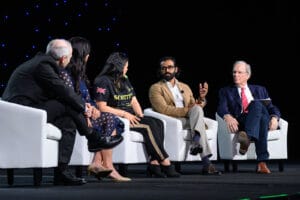
At the Closing Plenary session, all attendees heard from a panel of three honorees: Victoria Villareal (Daily Point of Light honoree #7,650) from Houston, Nikki Scott (U.K. Points of Light honoree #942) and Hamza Farrukh (Commonwealth Point of Light #129) representing the
. The three dove into their work and personal journeys of service, and left audience members with key take aways about leading social impact. They were joined by Points of Light board member Gregg Petersmeyer, who was the founding Director of the White House Office of National Service and supported President George H.W. Bush in the development of the Daily Point of Light award from the White House in 1989.
Points of Light was thrilled to welcome four new honorees from the Houston area to the Daily Point of Light honoree community. We were proud to work with our co-host, Interfaith Ministries of Greater Houston and Volunteer Houston, to celebrate incredible volunteers in the community. Four honorees we celebrated this week were:
Ann Kaesermann (#7,830) who serves as board treasurer of Interfaith Ministries;
Dee Dee Dochen (#7,831) who volunteers with ReelAbilities and is a long-time advocate for differently abled individuals;
Melissa Williams Murphy (#7,832) founder of iWrite, a nonprofit dedicated to empowering children to publish their own short stories;
Dana Farrar (#7,834), a volunteer with Theatre Under the Stars, a differently-abled theatre company.
Building Personal Connections
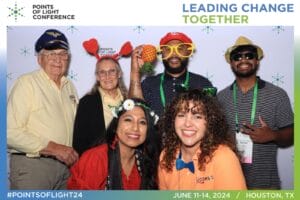
One of the joys of the Points of Light Conference is the opportunity to meet and grow relationships with other individuals passionate about change. In between diving into educational opportunities such as a workshop on building effective organization partnerships or a talk on leveraging AI for good, Daily Point of Light honorees made time to get to know each other – and have a little fun.
Honorees left with new knowledge, tools and relationships. In the words of one honoree, “I had so much fun and learned a lot from every single one [of my fellow honorees]. Keep up the good work!”
As we reflect on the Points of Light conference, we are reminded of the power of individuals to ignite change and the magic that happens when they come together.
Impact Icons Spotlight: AmeriCorps VISTA Builds Capacity for Change
The Points of Light Impact Icons series celebrates organizations that are creating measurable change within their communities. This month we are shining a light on the
is dedicated to fostering vibrant collaborations between higher education institutions and the communities they serve. One way they achieve this is by hosting and supporting AmeriCorps VISTA members in the region. We spoke with Lucio Perez, AmeriCorps VISTA Program Director at PCCE, who shares his perspective on the program’s transformative power.
What makes your organization an Impact Icon?
For the past 30 years, we have led the charge to advance equitable, place-based community engagement, provided grant support for campuses and developed innovative professional development for members in the region. That ensured New York and Pennsylvania colleges and universities would graduate students who not only become future leaders in their chosen fields but also civically engaged leaders in their communities.
Further, throughout PCCE’s inception, we’ve fostered the AmeriCorps VISTA Program for over two decades as an area of civic engagement, collaborative impact and commitment to our communities. We believe that fostering sustainable change for people, organizations and the climate is at the core of what we do. We seek to deepen learning, enrich intellectual humility and catalyze civic innovation.
Tell us about a project or initiative you’re working on right now that’s making a big impact on your community.
Currently, PCCE is leveraging the AmeriCorps VISTA program to expand the resources and capacity of member campuses in addressing co-identified priorities and systemic barriers to poverty. AmeriCorps VISTA members are being placed among college campuses and nonprofit community organizations across the regions of New York and Pennsylvania. VISTAs will be instrumental in building the capacity within their community, while simultaneously addressing issues of poverty through the four AmeriCorps priority focus areas: Education, Environmental Stewardship, Healthy Futures, Economic Mobility and Opioid Epidemic.
As full-time members over 12 months (service term), PCCE VISTA’s service will take many forms: tutoring program development (both middle school and high school), college access and success, youth development, literacy, ESL, community-school partnerships, migrant and refugee resource development, mentoring initiatives, efforts to tackle the digital divide via campus/community development and civic engagement, cross-sector approach for employment workforce, strengthening county government to address re-entry, recovery, individual and community resilience of the opioid pandemic, nutritious food access and education, and access to health care initiatives.
For the 22-23 fiscal year, PCCE placed 20 full-time (365 days) VISTA members and 14 summer associate members (10-week long program) across host sites composed of higher education institutions and nonprofit organizations. In 2022-2023 the PCCE VISTA program reported 220 community organizations were made more efficient, effective and/or increased their program outreach.
In regard to resource development, the PCCE VISTA program generated $7,786,782 of cash resources and in-kind resources during the program term. In total, the PCCE VISTA program recruited and managed 1,146 of both on-and-off campus volunteers with a combined total of 18,178 service hours during the project period. Additionally, a reported average of 3,859 youth received services provided by our VISTA-supported partners in all focus areas; 40 veterans, active duty and family members received services in all focus areas; 50 individuals received services in substance abuse programming; and 95 youth and adults experiencing homelessness received services in all of our VISTA focus areas.
“I’ve been a [PCCE] VISTA supervisor for 15 years with over 8 VISTA programs at my institution. Before being a VISTA supervisor, I was a VISTA with the PA Campus Compact (now PCCE) in 2005-2007. This organization mirrors my philosophy of mentorship, partnership and action. It is one of the few professional organizations I can say has had a tremendous recognizable impact on the communities in which they work. It is powerful to see young professionals grow and thrive as a VISTA into amazing colleagues. It’s equally amazing to see the longevity of anti-poverty programs initiated through the campus community partnerships supported through the organization and college campuses.”
— Meghan Boone Valkenburg, PCCE Partner & AmeriCorps Alumni
Do you have an upcoming special event or milestone that your organization is celebrating? Tell us about it!
PCCE is pleased to announce the release of $15,000 for our Civic Imagination Grants, which are available to partners (nonprofits and higher ed institutions) for up to $3000 each. PCCE’s Civic Imagination Grant program is designed to support community-based organizations and higher ed institutions working together in New York & Pennsylvania whether by proximity or interest in similar topics to address common issues. These grants may focus on one of these types: Partnership and Co-Sponsorship. Funds are drawn from an internal grant and have been approved by PCCE’s Board.
The Civic Imagination Grants build on partners’ capacity to cultivate civic imagination, deepen civic and community engagement, and strengthen PCCE’s regional communities. This year, we are especially interested in supporting efforts that focus on racial healing, democratic engagement and climate justice/change. However, we will consider applications with robust ideas that may not directly focus on these three topics. For more information, please email Danelle Wagner at [email protected].
What role does volunteerism play in your organization’s overall mission and objectives?
PCCE has a strong partnership with AmeriCorps VISTA Program. Over two decades, we’ve mobilized VISTA members, as well as community volunteers and stakeholders to the center of sustainable programming and implementation of robust services that meet the needs of the community and tackle poverty-induced barriers at the same time.
How are you recognizing and thanking volunteers for their contributions?
PCCE is a proud organization that is certified each year to award the prestigious
to our volunteers and VISTAs for their ongoing dedication and impact on uplifting our partners and community resources. PCCE hosts an annual in-person retreat for our VISTAs to gather, reflect and celebrate their accomplishments together! PCCE host’s a celebratory dinner to recognize the VISTAs impact on their work/community and ensure to share these great stories with the Mid-Atlantic VISTA office.
In addition to volunteering, describe other elements of the Points of Light Civic Circle®️ that your work involves. How has the Civic Circle become central to your approach?
PCCE’s approach to ongoing collaboration, equity, leadership, service and transformation closely aligns with Civic Circle’s focus. Our foundation is crucial as we listen and learn from our partners and their respective communities to ensure we work together to tackle the root of the problem.
Additionally, these elements ensure that PCCE places priority on supporting our partner’s capacity to cultivate partner engagement which leads to the public good; professional and skill development opportunities; venues for disseminating exemplary practices in campus-community partnerships; and leveraging, advocating and educating at the national, state and local levels for issues related to civic and community engagement.
What’s one piece of advice you’d give someone who’s looking to get more involved in their community through civic engagement?
Don’t be afraid – and step out of your comfort zone! There are a plethora of resources, organizations and passionate people who are eager to point you in the right direction and hear your voice.
National Service Matters Now More Than Ever
Congress must protect AmeriCorps to help communities in need.
Communities across our country desperately need help. Some are recovering from natural disasters and require food, water and shelter. Many confront economic misfortune, forcing families to rely on services like food banks they never imagined they would need. In others, school attendance rates have dropped, and afterschool programs are struggling. Military veterans and their families, who may need assistance with benefits, mental health services or academic support, often have nowhere to turn.
Each day, any one of these situations is happening in American communities, and
step up to answer the call.
As a public-private partnership and catalyst for local engagement, AmeriCorps has bridged divides and repaired communities for 30 years. AmeriCorps deploys thousands of members and volunteers to community-run organizations from coast to coast, helping people improve education, strengthen health services, protect the environment, support military families and grow local economies. Last year, more than
, including many who worked with the Barbara Bush Houston Literacy Foundation.
And yet the U.S. House of Representatives wants to cut AmeriCorps’ funding in half, to the lowest levels in the past three decades. If implemented, these cuts would eliminate more than 61,000 AmeriCorps and AmeriCorps Seniors positions. The Senate’s bill, though better, would still result in significant cuts to AmeriCorps.
We cannot afford for this to happen. From rural outposts to urban centers, AmeriCorps shows up to meet critical needs. Funding AmeriCorps is also an incredibly efficient use of taxpayer dollars, yielding more than
.
Americans, especially young people, need more opportunities to both contribute their energy and skills and strengthen the social fabric of our nation. AmeriCorps provides those opportunities, and now more than ever, we must invest in it. The challenges our nation faces are immense, and we need more people to step up and say, “Yes, I can help.”
When my father, President George H.W. Bush, launched Points of Light and signed the 1990 National Service Act, he paved the way for service to be recognized and empowered as a core value of American life. His work set the stage for the creation of AmeriCorps. My brother George carried on this national service legacy during his presidency, bolstering AmeriCorps’ vital work. They knew that the government could not face our nation’s challenges alone. It would take nonprofits, businesses and citizens all working together, something AmeriCorps makes possible every day.
In the past 30 years, investments in national service have proven beneficial, especially in times of crisis. Those who serve have supported more than 245,000 veterans and military families. They are also in 9,500 schools nationwide, providing educational support and increasing high school graduation rates.
Wherever there is a need, AmeriCorps is there, and cutting funding would leave gaping holes in critical services that communities and families sorely need.
This summer, David Eisner and John Gomperts, former heads of AmeriCorps under my brother and President Barack Obama, respectively, published a paper titled “
.” They thoughtfully explored how national service can advance bridge-building and how AmeriCorps members learn “civic CPR” — the basic mindset and skills to connect across differences, listen and collaborate. These crucial skills are at the heart of what both my father and brother paved the way for. People serving together increases understanding and communication to respect differences and helps foster trust and civility.
We implore Congress and the White House to invest in national service and reject shortsighted funding cuts to AmeriCorps. It not only supports communities across the country but also builds better citizens. Now is the time to lean into the values we hold dear and enable Americans to build bridges toward a stronger future.
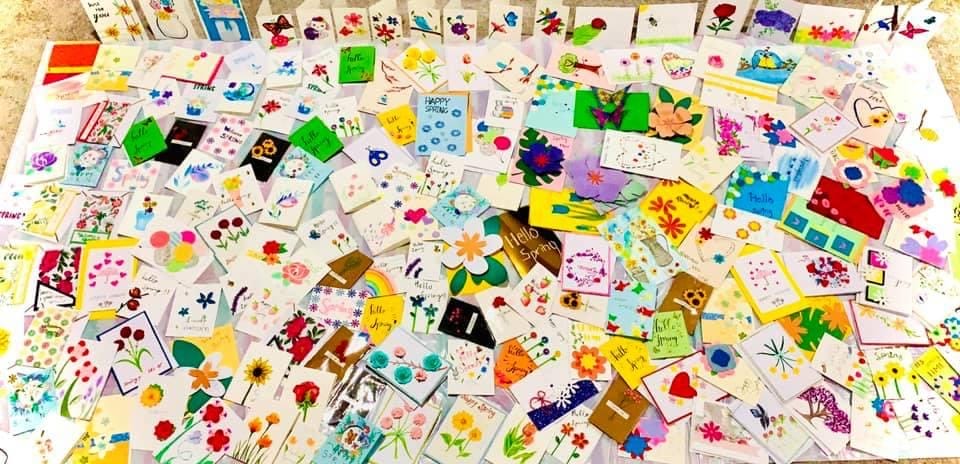
stands as a shining example of how art can serve as a powerful tool for engagement and social impact. Pastel Souls exemplifies how art can be a love language, reaching out to touch hearts across communities.
In a world often clouded by challenges and hardships, Zoya’s approach shines a light on the unique power of creativity and empathy. Her journey exemplifies how art can transcend traditional boundaries of engagement, turning every brushstroke into hope and every color into change. As we delve into the heart of this transformative movement, it becomes evident that Zoya’s work is not just about getting civically engaged; it’s about redefining the essence of giving through the universal language of art.
Are you a nonprofit leader who is innovating in the social impact space and wants to become an Impact Icon? Answer our QUESTIONNAIRE, and you could be featured here on our blog!
A Canvas of Compassion: Pastel Souls at a Glance
Founded by the visionary Zoya Eshwar, Pastel Souls is a youth-driven outreach program that harnesses the power of art to spread joy, creativity and support. Targeting diverse groups like seniors in memory care, veterans, children with special needs and survivors of abuse and homelessness, this organization has become a beacon of hope and inclusivity.
Pastel Souls began as a small group of five children and has blossomed into a robust family of more than 100 volunteers, partnering with 25 charity groups. “Our exponential growth is a testament to our mission,” Zoya shares with pride. “From art donations to organizing fundraising activities, our journey has been a vibrant tapestry of making a difference.”
Image courtesy Zoya Eshwar
The Heartbeat: Art Workshops
At the core of Pastel Souls are the art workshops, described by Zoya as “therapeutic sanctuaries.” These sessions offer more than just art; they are avenues for emotional healing, self-expression and growth. “These workshops hold a significant place in my heart,” Zoya reflects, her achievements, including the President’s Volunteer Service Award and setting two world records, mirroring the organization’s commitment.
“As of now, we have successfully organized 49 community art projects,” Zoya says, “and the true heroes behind this remarkable journey are the young individuals who share our passion for a more vibrant and compassionate world.”
Current Initiatives: The Unity Project
“The ‘Unity Project’ is our latest initiative, bringing together our volunteers to create art that’s donated to those in need,” Zoya explains. This project not only showcases the unity and creativity of volunteers but also significantly impacts the community, embodying the belief in the transformative power of art.
“The ‘Unity Project’ embodies our belief in the transformative power of art and the significance of unity in making a meaningful difference,” Zoya shares. “It’s a testament to the strength of our volunteers’ dedication and their commitment to spreading colors and joy in the lives of those who need it most.”
Impact by the Numbers
Over five years, Pastel Souls has made a measurable impact:
Artwork Donations: More than1,500 pieces donated.
Fundraising: Raised more than $10,000 for local nonprofits.
Art Supply Drives: Distributed 400+ art kits.
Book Drives: Collected 2,000+ books.
Volunteer Growth: From 5 to 100+ dedicated individuals.
Partnerships: Collaborated with 25 different groups.
Community Art Projects: Successfully organized 49 projects.
Recognizing Volunteers: Awards and Social Media Spotlights
Volunteers with Pastel Souls are celebrated with certificates, awards and social media recognition, underlining their invaluable contributions. “These volunteers wholeheartedly contribute their time, resources and in-kind donations to advance our cause,” Zoya says. “Together, we create a world where compassion and creativity go hand in hand.”
Image courtesy Zoya Eshwar
A Tapestry of Love and Art
For those seeking to get involved in their communities through volunteering, Zoya advises, “Start with your passion and find a cause that resonates with you. There’s no age limit for making a positive impact.” She emphasizes the importance of collaboration, saying, “Engaging with local community organizations or volunteering groups can amplify your impact and provide you with valuable resources and support. Working together with others who are passionate about the same cause can make a significant difference.”
“Lastly, don’t be discouraged by the scale of the task,” Zoya shares. “Civic engagement often involves small steps that, when taken collectively, lead to meaningful change. Every effort, no matter how modest, contributes to the betterment of your community. Stay persistent and focused on your goals, and remember that even a single act of kindness or civic participation can have a ripple effect in creating a more compassionate and vibrant community.”
Pastel Souls reminds us that love can be expressed in myriad ways, with art being a profound medium. Zoya Eshwar’s journey and the accomplishments of Pastel Souls not only set trends in volunteerism and social impact but also paint a picture of a world where compassion and creativity walk hand in hand.
Hispanic Heritage Month Spotlight on 9 Daily Point of Light Honorees
, September 15 to October 15, is a time to reflect on the achievements and contributions of Hispanic Americans. This annual observance serves as a beacon, shining a light on the countless champions who have been drivers of real and sustained change in their communities across the country.
Hispanic Heritage Month began as Hispanic Heritage Week in 1968, under President Lyndon Johnson and later, expanding to a 30-day celebration by President Ronald Reagan in 1988. The theme for this year’s celebration is “Todos Somos, Somos Uno: We Are All, We Are One.”
During this month of celebration, we not only pay tribute to the collective heritage of the Latine community but we are shining a light on people who exemplify the spirit of community service and uplifted others through their actions. Here we share the stories of ten exceptional Latine Americans who are Daily Point of Light honorees. Each one is a testament to the power of dedication, compassion, and unwavering commitment to creating positive change in communities across the country.
1.
, storybook gala co-chair for the Barbara Bush Houston Literacy Foundation and volunteer, has volunteered for 10 years spreading literacy. She also serves on the boards of and donates time to both Dress for Success, an organization that prepares women entering or reentering the workforce with things like professional clothing and resume assistance, and Nativity Academy, a small, under-resourced private school. She has even installed 25 Barbara’s Book Boxes as part of the program she started throughout the city. But she claims just a little time can go a long way.
“You, too, can create change. It can be as small as donating an afternoon to read to a child who doesn’t get that one-on-one time with anybody. That child will remember that. Or you could send a word of encouragement or a thank you to someone that has made your day. We’re all capable of doing our part. Find what calls to you.”
— Daily Point of Light Honoree #7650 Victoria Villareal, storybook gala co-chair and volunteer, Barbara Bush Houston Literacy Foundation
has brought her history of service to her volunteerism with The Pink Berets, an organization founded to support female veterans suffering from invisible injuries such as PTSD, Military Sexual Trauma, and Combat Trauma Stress. Liana’s role as a 9-year volunteer veteran is to She also helps to coordinate operations, events and support the CEO. She also supports the continuation of developing the vision and goals of the organization on an annual basis.
“Volunteering teaches you the value of compassion. It teaches you to be nonjudgmental because you never know where people have been.”
— Daily Point of Light Honoree #7622 Liana Garcia, volunteer and board member, The Pink Berets
is a community leader of the Residencial Luis Llorens Torres, a public housing complex in San Juan, Puerto Rico, where he helps in virtually every aspect of improving the lives of under-resourced residents. He has done everything from delivering essentials to seniors during the COVID-19 pandemic and solving problems that face the community to organizing programs promoting culture and the arts. Having grown up there himself, the complex holds a special place in his heart. Jeffrey has also been a member of the Puerto Rico Medical Reserve Corps since 2011 and assists the Department of Health with emergencies, natural disasters and public health issue awareness.
“I want people to see me as an example and to understand that it’s not important where you come from, where you study or what your social status is. The important thing is that you believe in your abilities, experiences and strengths to be a great human being and change agent.”
— Daily Point of Light Honoree #7524 Jeffrey Rivera Sanabria, community leader of the Residencial Luis Llorens Torres
has led conversations with schools, banks and other companies. During her last two years of high school, EliAnna co-founded a project though Youth Volunteer Corps of Reading called Stand Together Against Racism (STAR), an initiative designed to start conversations centered around racism and racial equity. She even helped to create a documentary about the group, leading discussions after screenings. Crediting her mom for her life of service, EliAnna recalls volunteering with Girl Scouts, American Clean-up and with her church from a very young age.
“My mother helped me understand what it is to help others that are in need or who might not even ask. Sometimes you just do it.”
— Daily Point of Light Honoree #7467 EliAnna Bermudez, co-founder, STAR
’s experiences growing up biracial inspired his interest in politics and social justice. During his first year in college, Tristan befriended Dylan Baca, founder of Indigenous Peoples’ Initiative (IPI), a youth-led organization that aims to eliminate stereotypes of Native American communities, amplify their voices and advocate for a better future. Dylan had just come off of a big win, successfully advocating for President Biden’s proclamation to designate Indigenous Peoples’ Day (IPD) as holiday alongside Columbus Day. He was becoming known as the kid who got a phone call from the president around campus and was looking to build on IPI’s success. Tristan jumped at the opportunity to join the advisory committee and, eventually, the board. His work in policy change and activism continues today.
“You never know when you walk past someone the struggles that they face. There are likely people who need help who are too afraid to ask for it.”
— Daily Point of Light Honoree #7525 Tristan Espinoza
has been involved with Down syndrome advocacy since the birth of her first daughter, Melissa. At the time, Maggie was just 24 so the diagnosis was completely unexpected since Down syndrome is often associated with pregnancy at a later age. Maggie founded GiGi’s Playhouse El Paso, which provides free educational, therapeutic, and career programs for individuals with Down syndrome from birth through adulthood, their families and the community.
“There is so much more joy in giving than there is in receiving. Volunteering not only helps people in need, worthy causes in the community, but more than that, it keeps you mentally stimulated and gives you a sense of purpose. It brings fun and fulfillment to your life. We are on this earth to serve others and not be served.”
— Daily Point of Light Honoree #7474 Maggie Morales-Moody, executive director, GiGi’s Playhouse
has been baking and selling the cookies to his community in Pleasanton, California, and donating the funds to help people in Colombia through his organization, HumanKIND Cookies. Since starting in the summer of 2020, Mateo and his sister, Sara, have baked and sold around 15,000 cookies to raise $30,000, all of which has been donated to Casa San Jose, a nonprofit organization focused on helping the most vulnerable people of Cali, Colombia, including senior citizens, foster children, low-income families and people who work as recyclers (one of the city’s lowest-paid and difficult jobs.) The money has been used to buy them groceries, diapers, school supplies and shoes, and even to fund special events such as a trip to the zoo.
“How things that we see as little can go such a long way. When I saw those ads on TV asking for donations of a couple dollars, I didn’t think it would help much. But now that I have been doing this for a while, I’ve realized that the $5 we make from a cookie box goes such a long way because it can supply a family with a week’s worth of food in Colombia.”
— Daily Point of Light Honoree #7445 Mateo Molina, founder, HumanKIND Cookies.
founded MORE — Mindfulness, Opportunities, Resilience, Equity — Latinoamérica a free and virtual education resource for Spanish speakers to help bridge the gap of gender equity and development for women, created with her co-founder Raysa Castillo. To date, Claudia has reached more than 20,000 Latinas worldwide through MORE Latinoamérica.
“I strongly believe that, through education and empowering women, we can achieve great things,”
— Daily Point of Light Honoree #7439 Claudia Jones, co-founder, MORE Latinoamérica.
realized how much isolation and loneliness was spreading through older adults without human connection. Martinez consulted his support system and made the jump to create his own nonprofit, AVUS Connect, to match student volunteers with older members of his Miami community. From his service and leadership, Martinez was awarded the United Way of Miami Outstanding Youth Award in 2022 and the 2022 Public Service Award from the Florida Council on Aging.
“The feeling of volunteering is unparalleled. Community service is seen as a two-way street, so you’re just not giving, you’re also gaining a sense of purpose and insight within your community, and a perspective of another person’s life or experience.”
— Daily Point of Light Honoree #7382 Shawn Martinez, founder, AVUS Connect
Do you know someone who acts as a point of light in their community each day? Nominate them for a Daily Point of Light Award.
Amplify Your Social Impact: Combine Elements of Points of Light’s Civic Circle®
If you’re looking to amplify your impact as you contribute to social good, start by considering which activities you’re engaging in. The truth is that civic engagement comes in many forms, and by combining various types of efforts, you can make your impact exponential rather than linear.
is a framework that helps guide individuals to live full civic lives by demonstrating nine different ways to get involved in causes they care about. Today, we’ll cover three of these avenues so you can consider how you might combine them to magnify your efforts and make your impact stretch that much further.
Volunteering
Of course, when many people think of civic engagement, they think of lending their time and talent through
. And for good reason – nonprofit organizations and NGO’s thrive on the collective power of their volunteers. Volunteers enable these organizations to do the best work they can with the resources they’ve been allotted.
It’s a good idea to think through your volunteer activities to ensure they align with your passions, capabilities and schedule. Whether you volunteer once a month for a few hours, a few times a year with a corporate team or every weekend, you are making a difference in the world!
to a cause or organization you care about, you allow for your dollars or goods to be put to the best use possible to benefit others. Donating allows organizations to continue their mission and spread awareness about a cause area. Donations can also directly benefit recipients – as in the case of a natural disaster.
Be aware that donating is only helpful if the donations – monetary or in-kind – are truly what the organization needs. Unwanted or unneeded donations are often trashed, contributing to waste. So be sure to do your research and ask for what donations are most helpful before you donate!
to elevate the causes they care about. Whether you’re sharing information via social media, talking to friends or family members about a specific issue, or marching in a peaceful protest, you can use your voice – which includes your own opinions, perspectives and concerns – as well as contributing to a collective voice rallying around a cause area.
Combining your voice with other types of civic engagement can be a powerful way to make your mission and message louder, clearer or more accessible to others. That said, be mindful that you don’t use the element of voice for performative activism, but rather that you “walk the walk” along with “talking the talk”!
Reclaiming the Public Square: Bringing Communities to the Table
Unlocking the Power of Voice through Community Engagement
The Fourth of July should be a time of reflection about the state of our nation and what we hope for its future, but how do we keep the momentum going year round? Civic engagement requires a renewed commitment to drive real and sustained change in communities worldwide. The work demands an inclusive public square where everyone’s perspectives are heard, valued and leveraged.
, president of The Field Foundation of Illinois, has a long history of bringing together disparate voices as a strategy for tackling systemic racism. In a recent presentation at the
, he highlighted the importance of reactivating the public square as a space for civic discourse, idea exchange and community celebration. Ash emphasized the need to reclaim this space and rebuild the civic relationships that underpin our society.
“I have spent all my career dealing with the various facets of segregation fueled by systemic racism that has plagued our beloved city [of Chicago], while recognizing its brilliant architecture, public art, diverse cultures and civic generosity,” said Ash.
To truly harness the power of voice, it’s essential to ensure that all community members have a seat at the table. The
is one of its most powerful elements, because true change occurs only when everyone’s voices are included and respected.
So, how can we bring communities to the table and activate their voices within the public square?
1. Value Differing Voices
Creating an inclusive public square requires actively seeking diverse perspectives and ensuring a platform for underrepresented voices. This means asking community leaders who have historically been marginalized to lead the conversations. A more comprehensive understanding of the issues that affect communities will, in turn, demand inclusive solutions.
2. Promote Dialogue and Active Listening
Engaging in open and meaningful dialogue is essential for fostering civic engagement across different groups and generations. Encouraging active
builds for empathy for and promotes the sharing of others’ experiences and perspectives. Actively seek opportunities for community members to come together, exchange ideas and engage in constructive conversations.
, communities need to lead decision-making processes. Ensure that established inclusive and collaborative decision-making mechanisms exist, such as community forums, town halls or advisory committees. Decisions made by a community result in a more active and participatory democracy.
4. Cultivate Community Leadership
Invest in community leadership who share the understanding that inclusivity is crucial for sustaining long-term change. Identify and support emerging leaders, providing resources, training and platforms necessary to amplify their voices and drive positive transformation. By nurturing community leadership, a ripple effect is created, inspiring others to step forward, take action and become advocates for change.
Bringing communities to the table is a fundamental step in activating the power of voice within the Civic Circle framework. By promoting dialogue, facilitating collaborative decision-making, and cultivating community leadership, we can create an inclusive public square that reflects our national communities.
The journey toward a more equitable and just society requires collective action, and by combining elements of the Civic Circle, you can amplify your impact. Each one of us has the power to contribute and make a difference. So, invite others to the table, and reclaim the public square as a space where all voices are valued, heard and respected.
What are your thoughts on activating the power of voice through community engagement? How can we bring communities to the table? Follow us on social media to share your ideas and experiences.
5 Ways to Champion Sustainable Practices With Points of Light Research
This is the first in a series on findings from Points of Light research. Check out the other blogs in this collection:
Earth Day is on April 22, and it’s a natural time to think about one of the biggest threats – and opportunities for action – facing the world today: climate change. It’s a global issue with big implications, including impacts on our health, our access to food, and the future of flora and fauna that support and sustain our planet. We’ve compiled some sustainable practices to help you make a positive impact.
Points of Light’s
when compared to other issue areas. This difference is likely due to the politization of climate change in recent years.
It’s clear that climate change is going to require large-scale, systemic change. Every individual has the opportunity to make a difference and affect positive change. Here are some tips for how you can leverage strategies for sustainability, tackle climate change and work toward a healthier environment.
5 everyday Sustainable Practices
Learn About the Issue of Climate Change
Did you know that 73% of people said they took time to learn about the issue of climate change?
.
When we learn about an issue before jumping into finding solutions, we can more effectively combat the challenges and remain sensitive to the communities impacted by it. If we don’t have the foundational knowledge surrounding what is going on, what work is currently being done and how best to help, we may even unintentionally cause further harm trying to solve the issue.
Start by reading books and blogs, listening to experts and examining research to get educated on the current state of things. You can check out
your time and talent is another element of the Civic Circle, and this is an excellent way to lend hands-on support to the causes you care about, including environmental issues and climate change. Volunteers provide critical support in the form of pro-bono labor, saving organizations valuable funds, increasing people power and maximizing resources.
You’ll want to make sure you find credible organizations that are working to solve the issues in sustainable ways. You’ll also want to be mindful of your schedule and capacity and choose an organization that can allow you to volunteer when you’re able – whether that’s once a week, once a month or during a special event with a team.
See how New Jersey teenager Jashmitha Sappa is working to keep batteries out of landfills.
Donate to a Nonprofit Taking on Climate Change
Don’t feel you have the time or capacity to volunteer? You can always
. As you research organizations working to tackle climate change, consider donating to these causes. Besides helping these organizations to thrive, you can also support ongoing research on climate change and the environment through your donations. Check our Points of Light’s free digital magazine,
, to learn more about how to vet each organization you consider to ensure that donor money is being spent wisely and the organization is actively working to advance the cause.
Whether you provide a one-time or recurring donation, your funds can help make a huge impact on the issues. Nonprofits in particular rely on donations to sustain their mission. Donors are what help these organizations pay their staff, resource their volunteer projects and keep moving forward with their crucial work. Through contributing money, services or goods, you can support the welfare of others and help advocate for a more sustainable, environmentally friendly future.
Contact Your Representatives to Voice Your Concerns
How else can you combat climate change and work towards a healthier, brighter future for the planet? Since many of the sources causing environmental harm today come from large corporations and well-established systems, changes in political leadership and agendas are necessary to see large-scale improvements.
As an individual, you can
for and what their stances are on environmental issues, sign petitions for action on climate change and even consider reaching out to local officials or leaders in your schools or workplaces to introduce green solutions to these spaces.
Read about Bank of America employee Beth Hartnett’s sustainability journey, including cultivation of a community garden in her coastal New England town.
Take Steps Toward Sustainability in Your Own Life
With a little effort, you can take steps to reduce your carbon footprint and contribute toward solving climate change. Start by assessing your own carbon footprint with a
. Then find ways to cut back on activities that are contributing to harmful emissions.
Perhaps you make a plan with your family or roommates to be more mindful of water usage and energy consumption. Maybe you opt for walking, biking or public transit instead of driving everywhere – or consider carpooling with coworkers and friends.
sustainable goods and be mindful of waste. Set up recycling or composting protocols in your home or workplace. Reduce your use of single-use plastics. There are myriad ways you can take small, daily actions to begin reducing your own carbon footprint.
Want to keep diving? Take a look at these topics to find out how you can leverage our research to take civic action in your own community:



 A Legacy of Leading Change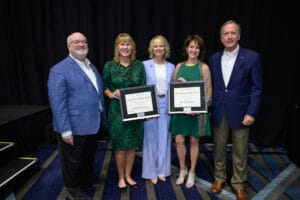
 Building Personal Connections