

Meet Daily Point of Light Award honoree Megan Markus. Read her story, and nominate an outstanding volunteer or family as a Daily Point of Light.
“It’s crazy how something as simple as a letter from the outside world can uplift one’s spirit.”
“Your letter is like a small root in this dark hole.”
“It brought a smile to my face and made me feel loved as a human being.”
These are the words of people in prison who have received letters from Megan Markus and her Paper Wings Project, the youth-led nonprofit she founded to send letters of hope to those who are incarcerated.
As the daughter of two criminal defense lawyers, Megan, a 17-year-old high school junior from Pinecrest, Florida, learned early on how flawed the U.S. justice system could be. She believes it too often prioritizes punishing people over rehabilitating them. Believing that everybody deserves human connection, she and her volunteers have sent more than 5,200 letters to incarcerated people across all 50 states and 105 countries and territories, inviting them to write back, which many of them do. That gave rise to a sister initiative, Chrysalis Review, the first youth-led literary and arts magazine dedicated to publishing the work of incarcerated writers and artists.
What inspired you to start Paper Wings Project?
Writing has always been my passion, my anchor, and my lens for processing the world, really for as long as I can remember. But for just as long, I’ve been deeply troubled by a justice system that too often prioritizes punishment over rehabilitation. The United States has one of the largest incarceration rates in the world, especially for a developed nation. Nearly 2 million people are incarcerated in the U.S. on any given day, and the U.S. holds an estimated 83% of the world’s people serving life without parole. So, it’s clear that our system prioritizes incarcerating people on a large scale. And once they are incarcerated, a very high number return to the clutches of the justice system, which emphasizes just how much it’s tailored not to address the issues that brought people into the system in the first place, but rather to simply punish them.
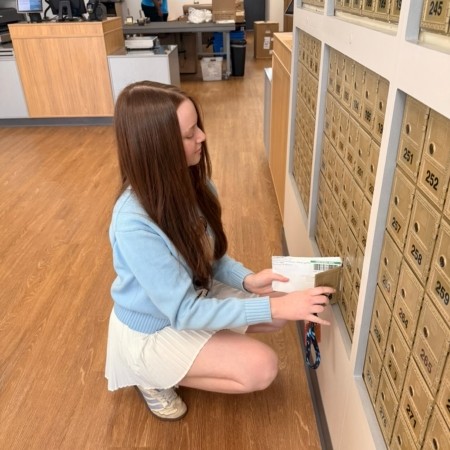
A year and a half ago, I began searching for a way to bridge my love of language with my commitment to addressing this issue. That search led me to establish Paper Wings.
How does Paper Wings work?
When we’re sending domestic letters, we search databases of both state and federal prisons to find people to send them to. In every first letter, we include a call to action to spread the word more widely, maybe to their roommates or their broader prison. Internationally, it’s more difficult because most countries do not have publicly available databases of people who are incarcerated. So, we correspond directly with prison officials and ask them to share our message and our invitation to include the writing of people in their prison in Chrysalis Review.
We have a network of volunteers who help us respond to the letters we receive, and we send a personal letter to every single person who responds. In terms of who writes the first letters, I do, of course. I also have a board that helps, and we receive letters from volunteers, which always get sent out. It’s really a diversity of sources.
What do you hope the letters bring to the people who receive them?
I hope it reminds them that their voices matter, because this whole initiative is grounded in reciprocity. It’s not just about sending them a message but also about giving them the opportunity to respond and enter into a personal correspondence. They deserve to have that kind of personal relationship. I also hope to bring them light and hope, and to inspire them to find the beauty in mediums like writing and art and the ways those mediums can allow them to express themselves and share their beliefs in a world that doesn’t always listen.
What has the response been to your letters?
The response has been truly overwhelming and definitely the most special aspect of this project to me. I’ll never forget receiving a letter from somebody who said they hadn’t engaged in personal correspondence in 27 years. I’ve also had people tell us that our letter didn’t just make their day but fundamentally changed their conception of themselves and what they deserve.
And it’s always fun to notify prospective writers and artists that they’ll be published in Chrysalis Review. We’ve had people tell us that their publication is healing so many bruises associated with sorrowful times in their lives. That has been extremely stirring for us, and very special.
Tell us more about Chrysalis Review.
Chrysalis Review is the first youth-led literary and arts magazine dedicated to publishing the work of incarcerated creatives. We’re a biannual magazine, and we aim to feature a patchwork of voices from various places representing various perspectives.
Our first issue, “Cocooned,” which we published in March, was themed after the dark and tight nature of transformation, which can often be easy to romanticize, especially in the context of a butterfly’s life cycle. But when you take a look inside the chrysalis, I’m sure you would find something very dark and claustrophobic. We’re currently working on our second issue, “Breaking Free,” which will probably be published in December or January. It’s more focused on the challenges that come with reintegration and what it means to theoretically be experiencing a better time, along with all the psychological impacts that can have.
Have you received criticism for giving a platform to people who are incarcerated? How do you respond?
I’ve definitely received questions like that, especially from people my age. A lot of people ask, what if you’re platforming somebody who truly deserves culpability for their actions? To that I say it’s not my place to judge these people, and that’s ultimately not my goal. I don’t have the bandwidth to presume to know everybody’s circumstances when it comes to incarceration. Instead, I’m aiming to preserve and respect their humanity, which I believe everybody has and deserves, regardless of how grave their punishment is.
It doesn’t take away from the fact that some of these people may have done something abominably wrong and are rightfully in prison. It’s more about reaffirming that these people are all human and are not simply a crime that was reported in the news, but also represent the full spectrum of our experiences.
Is there a moment from your volunteering that sticks out to you?
I’m the daughter of two criminal defense lawyers, so we often share very poignant and special letters with each other and engage in discussions about them. I’ll never forget the first pile of letters we received as an organization and reading those with my dad. We both cried, and we still cry at many of the letters we receive.
One person told us that our letter made their day and gave them essentially the fuel they needed to keep going. Those were some of the first letters we received, and I wasn’t even expecting many people to respond, much less respond with such candor and testaments to how our organization impacted them.
What do you hope people take away from your story?
I hope people can understand that volunteering is not simply a linear relationship between benefactor and beneficiary, because that presumes one person is giving all of the effort and time and the other person will just receive the fruits of that effort. While that’s certainly true, in my experience running Paper Wings, I have seen how volunteering is a source of reciprocity. As much as I hope our organization has given to incarcerated populations, they have also deeply, indelibly impacted our lives through their responses, their honesty, and their willingness to lay their voices on the page. It goes both ways. It’s a bidirectional relationship.
Do you want to make a difference in your community like Megan? Find local volunteer opportunities.