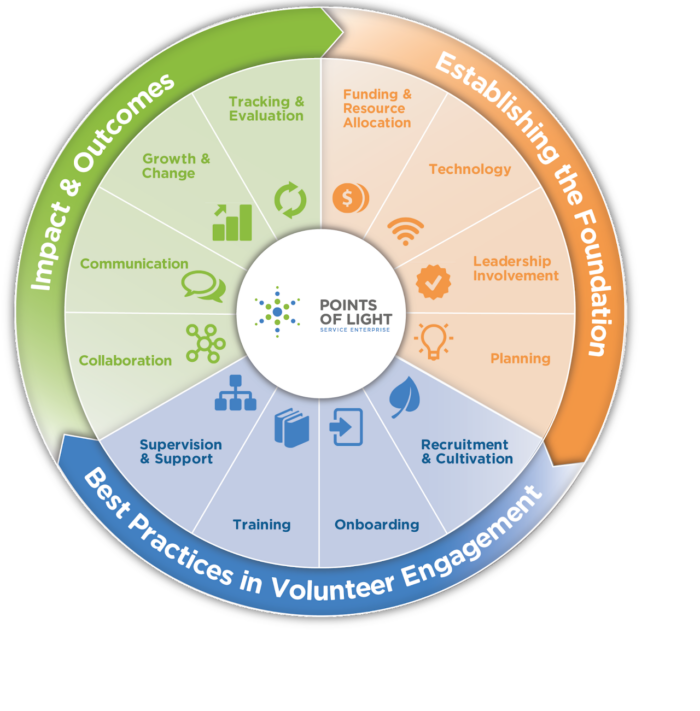
ased on additional, thorough analysis of the data, Deloitte, Points of Light, Algorhythm and the RGK Center for Philanthropy at the University of Texas at Austin identified twelve core characteristics that are now the basis for the determination of a Service Enterprise:
1. Leadership Involvement: Executive and board leadership demonstrate through actions their commitment to community involvement, and the engagement of volunteers as a key strategy to achieve the organization’s mission.
2. Planning: Thoughtful, comprehensive preparations for volunteer and community engagement based on established principles and practices of effective management.
3. Funding & Resource Allocation: The provision of the financial, human, space, and material tools, and means, necessary for the engagement of volunteers, as well as the willingness to seek additional support as needed.
4. Technology: The broad-based utilization of technology to facilitate all aspect of volunteer engagement, including record keeping, communication, and service options.
5. Cultivation: Engaging individuals and groups to serve your organization is an ongoing cultivation process. Recruitment should be targeted to assure a diverse mix of community members with the skills, interest and abilities to further your mission.
6. Onboarding: Providing a smooth pathway to service through careful screening, preparation, and guidance that includes both community members and staff involvement.
7. Supervision & Support: Supervision assures that oversight and support are consistently provided to volunteers and community partners to ensure they are given the opportunity to succeed, and to feel valued and appreciated.
8. Training: Education and skill development, as well as the knowledge of organizational parameters and boundaries, are critical to ensure that both volunteers and staff are equipped to perform their work and to work effectively together.
9. Tracking & Evaluation: Tracking and evaluation assesses the degree to which an organization monitors progress towards institutional goals and the performance of volunteers, staff and community partners in reaching these objectives.
10. Communication: Effective communication takes many forms, and operates through an increasingly wide and diverse array of channels including formal and informal means, print and social media to send information to external and internal groups.
11. Growth & Change: Vibrant, exciting organizations seek ways to improve services, cultivate leaders, continuously seed new ways of thinking, and create new platforms for action and problem solving. Staying on the cutting edge of industry practices motivates staff, whether salaried, or non-salaried.
12. Collaboration: Being a part of your community is vital to the work and services of nonprofit and public sector organizations. Collaborative undertakings with other organizations, your constituents, and your volunteers, build relationships and sharpen the focus of service organizations.